Why is compression therapy needed for venous leg ulcers?
Benefits of compression therapy
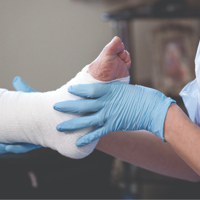
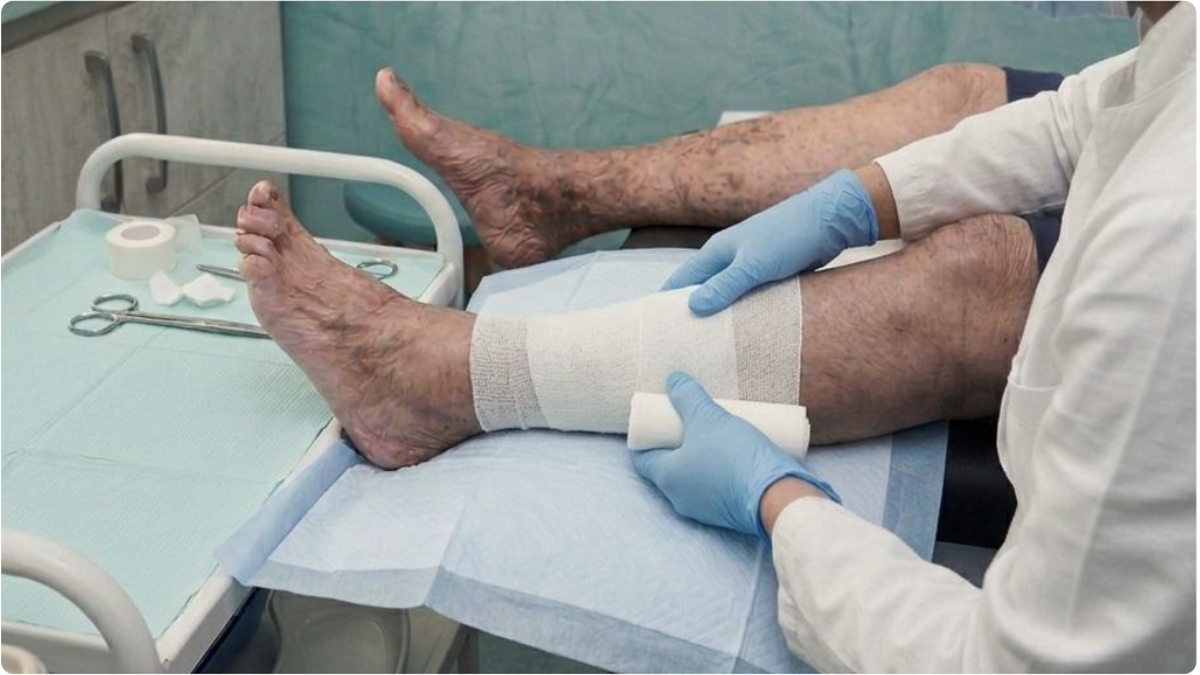
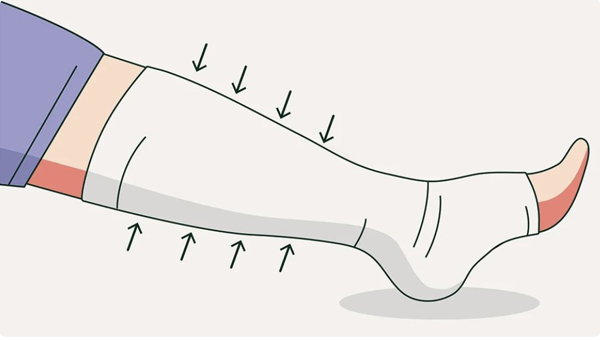
- Compression therapy applies gentle pressure to your legs, helping blood flow back towards your heart.
- By improving blood flow, compression therapy helps reduce swelling in your legs and feet (oedema).
- Compression therapy supports the healing of venous leg ulcers and can help reduce discomfort.
- Wearing your compression therapy as advised can also help reduce the risk of ulcers returning.1
How compression therapy works
Venous leg ulcers form when blood pools in the legs, due to problems in the veins. Compression therapy applies gentle pressure on your lower legs, improving blood flow and helping the veins pull blood back to the heart.
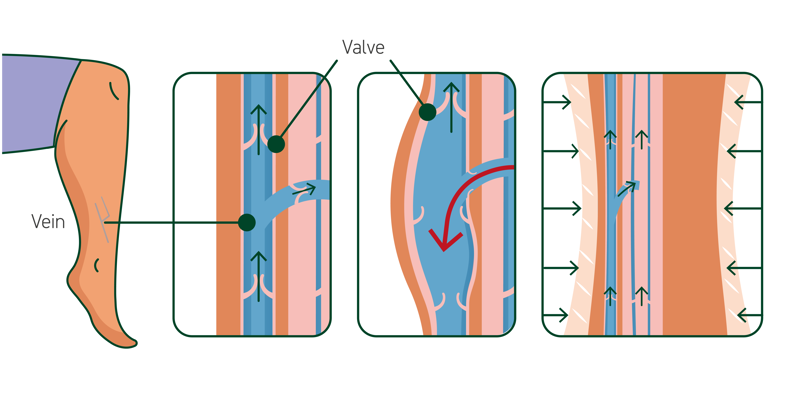
What happens in the leg?
-
A healthy vein
Effectively pumps blood back to the heart.
-
A damaged vein
Blood to flow backwards and collect in the lower leg, causing swelling and increased pressure.
-
The benefit of compression
Compression therapy applies gentle pressure to the leg, helping blood flow back to the heart. This reduces swelling and supports healing.
-
How daily exercise helps compression therapy
Your doctor or nurse may have told you about the importance of daily exercise to support your venous leg ulcer to heal. This is because exercises that improve ankle mobility, increase flexibility in your lower legs, and strengthen your calf muscles can all help improve blood flow to your legs and ankles.
Doing your exercises daily while wearing your compression therapy can make a difference. Movement improves blood circulation in your lower leg and reduces swelling, which enables the compression therapy to work more effectively.2
Four daily foot exercises to support compression therapy. Watch the video to get started.
-
Compression therapy - Stick with it - it is worth it!
To support your venous leg ulcer healing, wearing compression therapy is essential. Not wearing your compression garments can risk delayed healing. Always follow your health care professionals recommendation. They will have selected the most appropriate compression treatment for you.
Try these tips while doing compression therapy:
- Take a short walk if the compression therapy feels “too tight” or is uncomfortable in bed at night
- Raise your legs as much as possible when resting - toes above your hips
- Elevate your feet for 30 minutes three to four times daily
- Keep your legs and feet raised under pillows while you sleep
- Exercise and walk daily
- Contact your nurse rather than trying to remove the compression yourself.1
Always follow your doctor or nurse`s advice.
What compression level do I need?
Your nurse or doctor will tell you which level of compression therapy you need; whether light, medium or high. This depends on your symptoms and whether you have any underlying health conditions.

Compression therapy may take some time getting used to. However, it is a key therapy to effectively treat your venous leg ulcer.
FAQ
-
What does compression therapy do?
Venous leg ulcers develop when blood pools in the legs because the veins are damaged. Compression therapy applies pressure to the lower legs, helping to improve blood flow and reduce swelling (known as ˘oedemaˇ). This can help your venous leg ulcer heal faster.
-
Why venous leg ulcers don´t heal without compression therapy?
Wearing compression garments supports your venous leg ulcer healing. Your doctor or nurse will assess whether compression therapy is right for you, based on your age, mobility and any underlying health conditions.
-
Do I need to wear my compression dressing at night?
Yes, it’s generally recommended to wear your compression dressing at night unless your nurse advises otherwise. Keeping the dressing on helps maintain consistent pressure, which is important for healing and reducing swelling. If you have concerns or experience discomfort, be sure to discuss them with your nurse.
-
What are the risks of not using compression therapy?
Wearing compression therapy is essential to support your venous leg ulcer healing. Not wearing your compression garments can risk delayed healing.
-
How long should I wear compression therapy?
Your nurse or doctor will tell you how long to wear your compression therapy. In most cases, compression should be worn as advised throughout the healing process to improve blood flow, reduce swelling and support wound healing. Always follow your healthcare professional's instructions.