Why does a venous leg ulcer happen?
When the valves in the leg veins become damaged or weakened, blood can flow backwards and collect in the lower leg. This increases pressure in the veins and can lead to swelling and skin damage over time.
Several factors can increase the risk of developing a venous leg ulcer, including previous leg injuries, surgery, reduced mobility, being overweight, a history of blood clots, pregnancy, increasing age, and a family history of vein problems.
What happens in the leg?
-
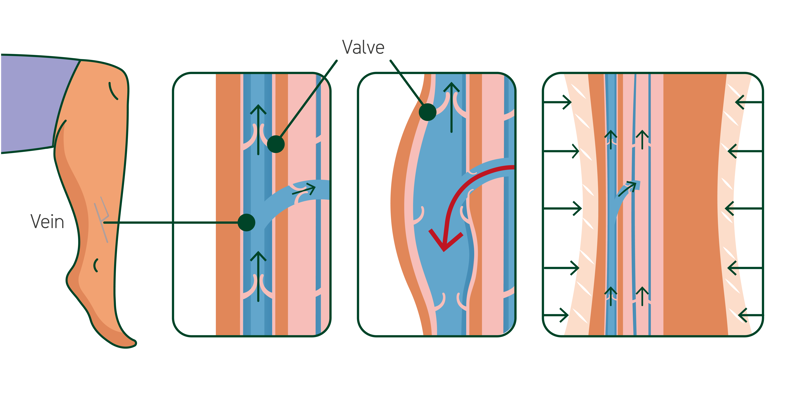
A healthy vein
Valves help blood flow back to the heart.
-
A damaged vein
Blood to flow backwards and collect in the lower leg, causing swelling and increased pressure.
-
The action of compression
Compression therapy applies gentle pressure to the leg, helping blood flow back to the heart. This reduces swelling and supports healing.
-
Over time, the increased pressure can cause swelling, changes to the skin, and eventually an ulcer. Simple steps that may help support healing include:
- Wearing your compression therapy as advised.
- Raising your legs when sitting or resting.
- Staying as active as possible.
- Eat healthy and drink more water
Helping your venous leg ulcer to heal
Venous leg ulcers can take time to heal, and healing may be slower if swelling is not well controlled. Following your healthcare professional's advice and wearing compression therapy as recommended are important parts of treatment.
Small actions every day can also make a difference over time. Raise your legs when sitting, try to avoid knocks or in juries to your legs, and moisturise your skin frequently.1
-
Symptoms of venous leg ulcer infection
It's important to be aware of any changes to your wound in order to recognise possible signs of infection early on. Signs of an infected wound include:
- Increased wound pain
- A sudden increase in fluid and discharge from your wound
- A new smell, which could mean there is bacteria or dead tissue in the wound
- Change of skin colour in the periwound skin area
- You have a high temperature (fever)
What to do if a venous leg ulcer is infected
If bacteria enter the wound, it can multiply and cause an infection. An infection may remain in the wound (local infection), spread to nearby areas (spreading infection), or other parts of the body (systemic infection).
Call your doctor or hospital immediately if you notice any signs of infection, including:
- Worsening or unmanageable pain
- A high temperature (fever)
- Rapid heart rate
- Breathing fast
- Feeling drowsy, weak or confused
- Swelling or warmth around the ulcer
- Discoloured skin - more noticeable in black or brown skin
- Leaking pus or other foul-smelling discharge.2
Looking after your venous leg ulcer
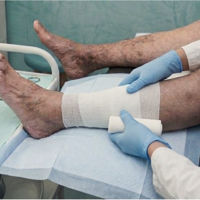
If you have a venous leg ulcer, your nurse or doctor will regularly clean and dress the wound. Changing your dressing is an important part of caring for a venous leg ulcer. Your nurse or doctor will either change it in clinic or at home.
It can help set your mind at rest if you know what to expect and what each step involves:
- Cleansing and debridement - this is the first phase when your nurse takes off your old dressing, and after cleansing, removes any infected, damaged or dead tissue (called debridement.) As a result, your wound heals faster and the infection risk lowers.
- Applying a new dressing - this helps protect the wound by sealing in moisture which is crucial for its healing.
- Moisturising the skin - regularly moisturise the skin around the wound to hydrate the skin.
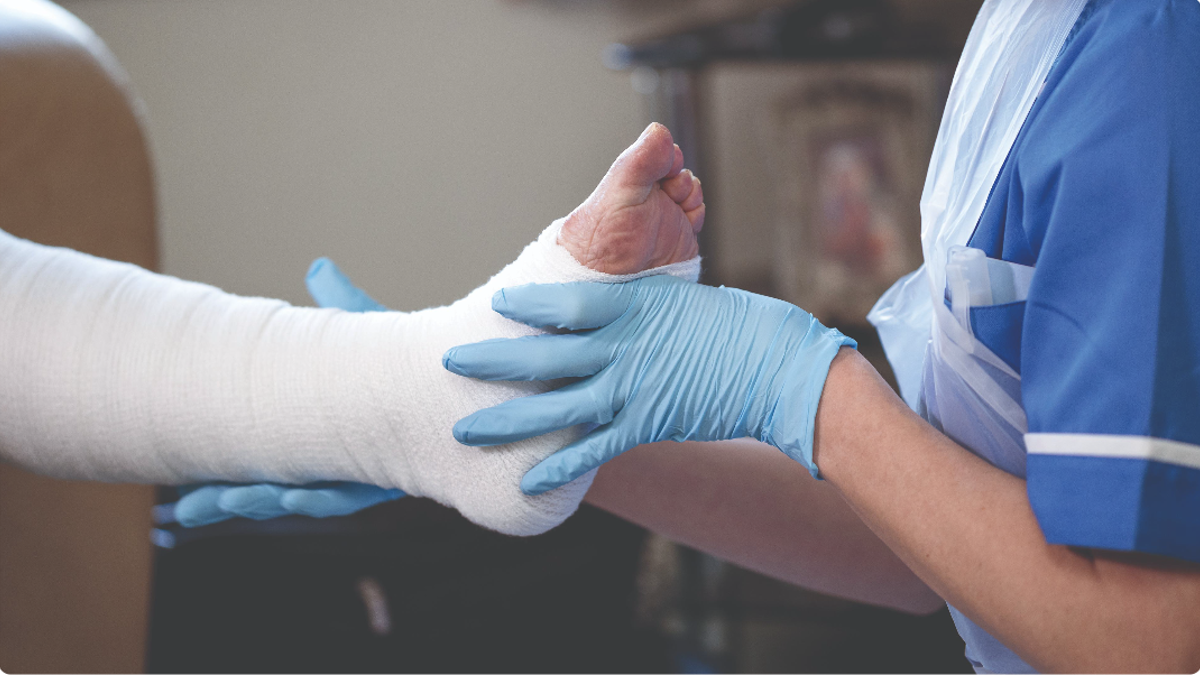
- Adding compression - using compression therapy around your leg helps reduce swelling and improves blood flow.

Seeking medical treatment early can help prevent the infection from becoming more serious. Being alert to changes in your venous leg ulcer and getting help promptly can support faster treatment and will help you stop the infection early.
FAQ
-
How to tell if a leg ulcer is infected?
Your venous leg ulcer may be infected if the pain becomes worse. You may notice a sudden green or unpleasant-smelling liquid leaking from the wound and swelling around the injury. The skin may darken or turn yellow or green. You may also feel feverish. Contact your doctor or hospital urgently if you notice any of these signs.
-
Is redness normal in leg ulcers
No, redness is not normal. Your venous leg ulcer is infected if you notice redness or swelling of the skin around the wound. Other signs of infection include a sudden green or unpleasant-smelling liquid leaking from the ulcer, worsening pain and feeling feverish. Contact your doctor or hospital at once so the infected ulcer can be treated early.
-
What's the difference between a venous leg ulcer and cellulitis?
A venous leg ulcer is an open, chronic sore that takes more than two weeks to heal. Cellulitis is an infection caused by bacteria entering through a break in the skin.3 Both conditions need rapid treatment to prevent them from worsening, so contact your doctor urgently.
-
When is a leg ulcer infection serious?
An infected venous leg ulcer is serious because it can be life-threatening. Contact your doctor or hospital immediately if you have a fever, rapid heart rate, are breathing rapidly and the pain is getting worse. Other signs of serious infection include confusion, weakness or drowsiness.
-
Can a leg ulcer infection become septic?
Yes. Sepsis can occur if your venous leg ulcer becomes infected and your immune system over-reacts.4 Contact your doctor or hospital urgently if your body temperature is high and you feel feverish, your heart rates rapid and you're breathing quickly. Other signs of sepsis include drowsiness, confusion or weakness.
-
What do I do if my wound smells?
If your wound has a smell, it may indicate bacteria or dead tissue. Keep the area clean and continue using your dressings and compression products as directed. If the odor persists or worsens, contact your nurse for further evaluation.