Looking for details about pre-warming with the BARRIER EasyWarm?
Contact us for more information.
Active prewarming with quiet cordless ease
Prevent perioperative hypothermia with BARRIER® EasyWarm®
The following information is intended for Healthcare professionals.
Pre-operative warming is a crucial aspect of patient care that significantly impacts surgical outcomes.
Here are five key reasons why pre-operative warming with BARRIER® EasyWarm® active warming blankets is so critical.
-
1. Prevention of hypothermia
Hypothermia can occur during surgery due to the effects of anaesthesia, as well as the cold operating room environment2. Pre-operative warming helps maintain normothermia, reducing the risk of hypothermia and its associated complications3.
2. Reduced risk of surgical site infections
Maintaining a normal body temperature may reduce the incidence of surgical site infections. Hypothermia can impair the immune response and decrease blood flow to the surgical site, increasing the risk of infection2.
3. Improved anaesthetic outcomes
Anaesthesia can cause vasodilation and heat loss, leading to hypothermia2. Pre-operative warming helps counteract these effects, ensuring that the patient remains warm and comfortable throughout the procedure. This can lead to a smoother recovery3.
4. Enhanced patient comfort
Patients who are warm before surgery experience less anxiety and discomfort4. Pre-operative warming can improve overall patient satisfaction and contribute to a more positive surgical experience.
5. Reduction in post-operative complications
Hypothermia is associated with various post-operative complications, including increased blood loss and need for transfusions, prolonged hospital stays, and higher rates of morbidity and mortality2. By preventing hypothermia, pre-operative warming can reduce these risks and improve overall surgical outcomes3.
Using BARRIER® EasyWarm® active warming blankets for pre-operative warming is a simple yet effective intervention that plays a vital role in enhancing patient safety and improving surgical outcomes.

Expert Q&A: Top tips to prevent perioperative hypothermia
Professor Jed Duff, Chair of Nursing at Royal Brisbane and Women's Hospital and editor of the Journal of Perioperative Nursing, recommends pre-warming every patient unless there is a contraindication. But he acknowledges that practical barriers in a hectic pre-operative area can make it difficult to implement.
In this Q&A, Professor Duff explains why surgical pre-warming is critical and offers his top tips for practical pre-warming protocols.
-
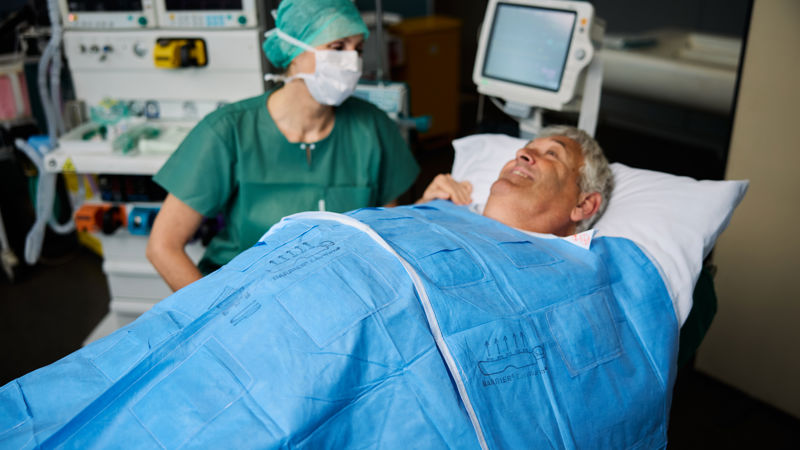
Discover BARRIER EasyWarm
BARRIER® EasyWarm® is an active self-warming blanket that can be used before, during and after surgery to help prevent perioperative hypothermia.
-
How to Use EasyWarm
Watch how EasyWarm is applied pre-op and remains effective throughout the patient journey — all with no external power or complex setup.
Request a BARRIER EasyWarm demo
-
References:
-
Australian College of Perioperative Nurses Ltd (ACORN). The New ACORN Standards: Volume 3 – 2023 Standards for Safe and Quality Care in the Perioperative Environment (SSQCPE) for Organisations. Adelaide: ACORN; 2023.
-
Duff J. Busting persistent myths about perioperative hypothermia. J Perioper Nurs. 2023;36(3):article 4.
-
McSwain JR, Chilbert M, Kimbrough BA, et al. Perioperative hypothermia: Causes, consequences and treatment. World J Anesthesiol. 2015;4(3):58–65.
-
Riley C, Andrzejowski J. Inadvertent perioperative hypothermia. BJA Educ. 2018;18(8):227–33.
-