Total Value
Redefining Total Value for wound care
Dressing choice is a value decision, not a cost decision
Value based healthcare focuses on the overall value of a wound care pathway rather than the cost of any single product1. It means better patient outcomes can be delivered while using resources more efficiently: fewer dressings, fewer nursing hours and less time in hospital. Learn more with Mölnlycke®, Total Value.
Dressing Costs vs Total Cost of Care
Did you know that the largest proportion of cost associated with hard-to-heal (chronic) wound care is the time spent with nurses, general practitioners (GPs) and other healthcare professionals?*
-
0Visits
Nurses, GPs, other clinicians -
0Other
Admissions, tests, medications -
0Wound Care Products
The cost of wound care products
*Adapted from Guest JF, Fuller GW, Vowden P. Cohort study evaluating the burden of wounds to the UK's National Health Service in 2017/2018: update from 2012/2013. BMJ Open. 2020;10(12):e045253
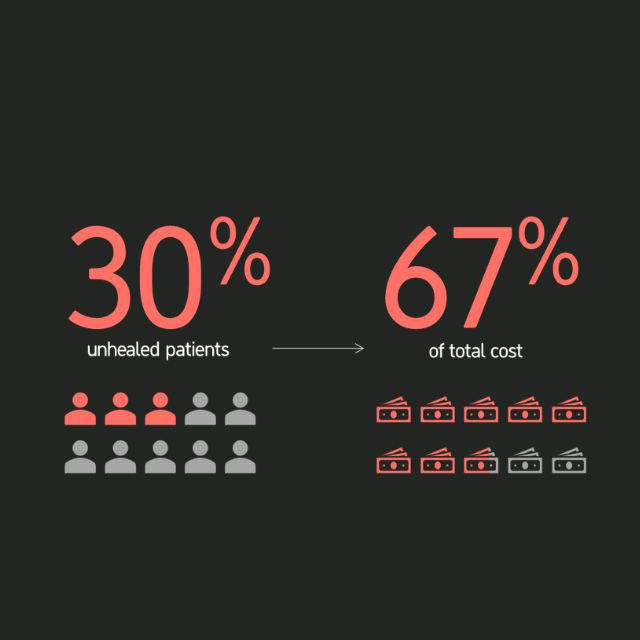
Unhealed wounds carry most of the burden
Looking at patients by healing status, a small group of unhealed wounds accounts for the majority of total management cost. This is where efficient and effective dressing choice has the biggest impact2.
Hard-to-heal (chronic) wounds are a highly prevalent and growing challenge for the healthcare system with their true burden widely underestimated. In Australia, chronic wounds affect an estimated 450,000 Australians and are associated with an annual healthcare cost burden of approximately A$3 billion2. In the UK, 30% of unhealed wounds equated to 67% of the total cost of wound care treatment3.
What are the 3 main cost drivers in wound care?
-

Increased frequency of dressing changes
More frequent changes mean more nursing time, more materials and more disruption to the wound bed.
-

Protracted healing time
Wounds that take longer to heal accumulate cost across every visit in the form of additional dressings and additional nursing time.
-

Increased occurrence of complications
Infections, leakage and periwound skin damage add treatment steps and extend the wound care episode.
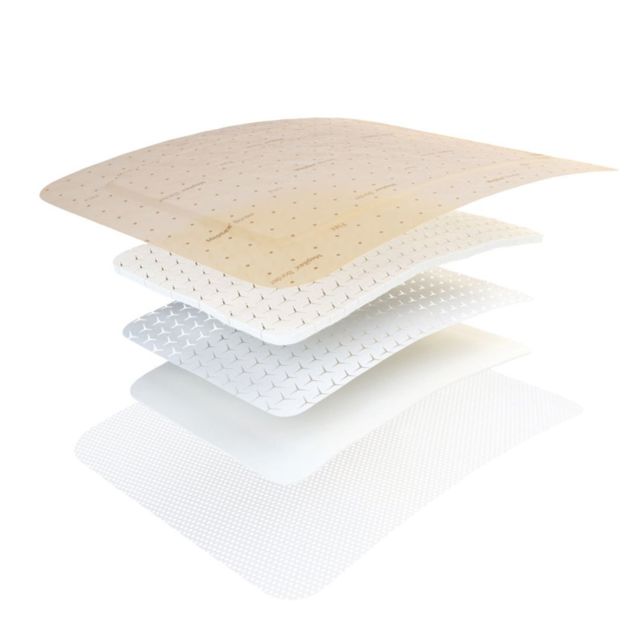
Mepilex® Border Flex - Delivering Total Value in every Layer
-
A highly breathable backing film
With high breathability, the backing film includes dots that allow you to track the progress of the fluid within the dressing. It also works as a barrier against bacteria particles/microbes larger than 25nm and is showerproof.
-
A retention Layer
This layer effectively manages both normal and thick wound fluid and traps bacteria.
-
A spreading layer
Distributes wound fluid over a wide surface area to maximise the transfer of fluid to the retention layer and backing film.
-
A foam layer
Absorbs wound fluid and transfers it to the spreading layer
-
A Safetac® wound contact layer
Safetac® Technology minimises pain at dressing changes and reduces the risk of further damage to surrounding new tissue so wounds remain undisturbed to support natural healing.
Total Value articles of interest
-

Total Value for Procurement
Seek partnership, not just products, for a strategic mix of high-performing solutions, clinician support and health-economic insights.
-

Total Value and high performance
We help teams measure and drive value through practical, consultative support with a focus on improved wound care performance and sustainable financial savings.
-
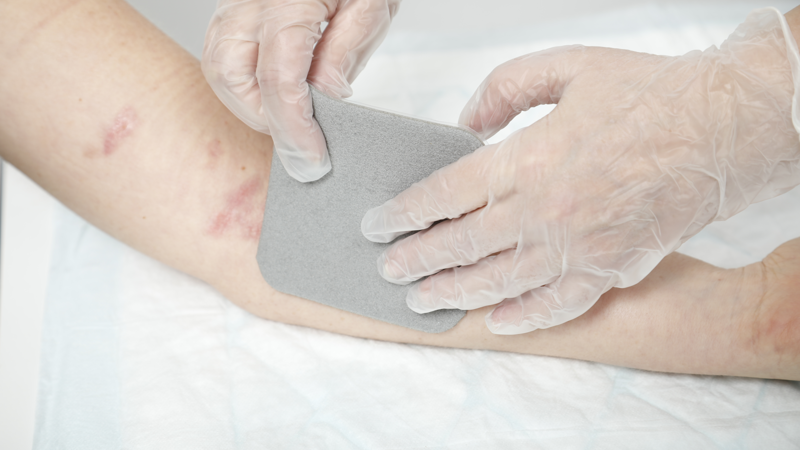
Total Value with burns dressings
Burn care is associated with high costs, but it is important to look beyond price-per-unit to consider the total cost of care and cost savings realised by fewer dressing changes, less nursing time required and fewer pain relief medications.
Mepilex® Border Flex can be used by lay persons under supervision of Healthcare Professionals (HCPs).
ALWAYS READ THE LABEL AND INSTRUCTIONS FOR USE.
IF YOU ARE CONCERNED ABOUT YOUR WOUND CONTACT A/YOUR HEALTHCARE PROFESSIONAL.
References
-
- Porter ME. What is value in health care? New England Journal Medicine. 2010;363(26):2477-2481.
- Wilkie J, Carville K, Fu SC, Kerr R, Finlayson K, Tuffrey T, Lenzo JC, Geelhoed G. Determining the actual cost of wound care in Australia. Wound Practice and Research. 2023;31(1):7-18.
- Guest JF, Fuller GW, Vowden P. Cohort study evaluating the burden of wounds to the UK’s National Health Service in 2017/2018: Update from 2012/2013. BMJ Open. 2020 Dec 22;10(12).