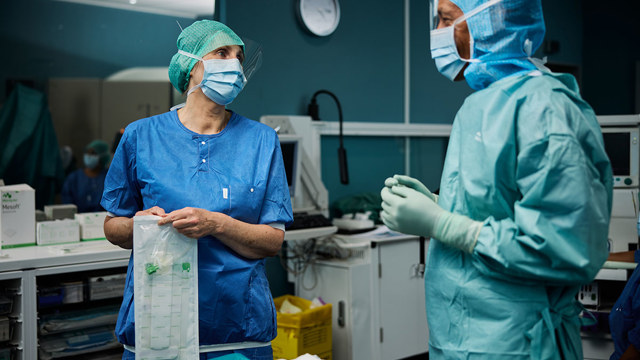
More than 1.4 million people at any given time suffer from healthcare associated infections, HAIs2, and the financial impact and unnecessary patient suffering is severe. As many as 1 in 11 patients become infected worldwide3 and it can be a potentially life-threatening condition. In Europe the cost of HAI average to 7 billion EUR annually4.
How to prevent HAIs and SSIs
To be successful in infection prevention as well as protecting against HAIs and SSIs, safety procedures and routines need to be put into place. A study on the efficacy of nosocomial chemotherapy (SENIC) found that intensive infection control and surveillance routines resulted in a 32 percent reduction in infection rates over a five-year period1. The key is implementing routines on many levels and using the right products and solutions.
- Importance of skin preparation
- Knowing the rates of SSIs
- Leadership within organisations
- Choosing the right products and solutions
Importance of skin preparation
Skin preparation is of the utmost importance in the prevention of SSIs. The recommendation is to use a 2-percent chlorhexidine gluconate and 70-percent isopropyl alcohol solution to decolonise the skin prior to surgery. This is based on a substantial body of evidence suggesting that this is the optimal agent for pre-surgical skin antisepsis5. Evidence suggests that it is the patient’s own skin that is the source of most of the pathogens involved in SSIs6. Therefore, to have a greater focus on skin antisepsis may lead to a large impact on infection rates.
Knowing the rates of SSIs
Studies have demonstrated that the incidence of SSIs varies widely between hospitals and between surgical procedures7. Surgical teams that know their SSI rates can undertake measures to reduce them. This can be achieved through the implementation of basic, relatively inexpensive infection-prevention measures8.
Using the right products and solutions for optimal protection
At Mölnlycke Health Care we take great pride in creating the safest possible surgical single-use solutions for the security of both patients and clinicians. Infection prevention is at the core of everything we do and we are continuously developing new products and solutions to provide even better staff and patient protection. Choosing the right products is an essential component in sustaining and developing successful infection control.
Biogel® – surgical gloves

Biogel has a superior indication system for enhanced safety. Up to 97 percent of glove breaches are detected with the Biogel puncture indication system. This is a security feature that helps to minimise the risk for both patient and health care professionals from blood-borne pathogens, including HIV and hepatitis viruses. Overall, Biogel surgical gloves have the best Acceptable Quality Level (AQL) for freedom from holes on the market8.
Double gloving has been found to reduce surgical cross-infection between staff and patients8. Double gloving is recommended by US AORN (Association of Perioperative Registered Nurses) and the RCS (Royal College of Surgeons of England). Studies have shown that the detection of perforation during surgery was a worryingly low 37 percent with single gloves compared to 87 percent with a Biogel puncture indication system. Adding a second pair of surgical gloves significantly reduces perforations to the innermost glove, 34.7 percent for single gloves and only 3.8 percent for double gloves9, 10.
View our range of surgical gloves
BARRIER® – Surgical staff clothing

BARRIER surgical staff clothing includes a selection of protection and comfort combinations, adapted to the varying demands of different procedures. BARRIER surgical gowns are procedure-specific products folded for easy aseptic donning. Surgical gowns adds to your infection control by providing a bacteria and liquid protection barrier. BARRIER surgical gowns offer different levels of protection, covering the needs of less invasive operations with fluid-repellent material through to wet surgery with breathable plastic reinforced fronts, impermeable sleeves and impermeable seams. The toughest conditions can be met with a surgical gown that is impermeable all over. BARRIER surgical gowns also have very high comfort levels thanks to the breathable and soft material. BARRIER products provide the right gown for the procedure, thus optimizing cost and reducing environmental and aseptic impact.
Wearing apparel is developed to ensure both patient and OR staff safety and comfort for healthcare professionals. The range of single-patient scrub suits and warm-up jackets provides the comfort and quality of wearing fresh clothes every day. Single-patient scrub suits contribute to hospital infection control6. The clean air suits provide an effective particle and microbial barrier and reduce the flow of skin scales carrying bacteria from staff to the environment5, 7. Our range of staff clothing also includes headwear and masks.
View our range of staff clothing
BARRIER® – surgical drapes

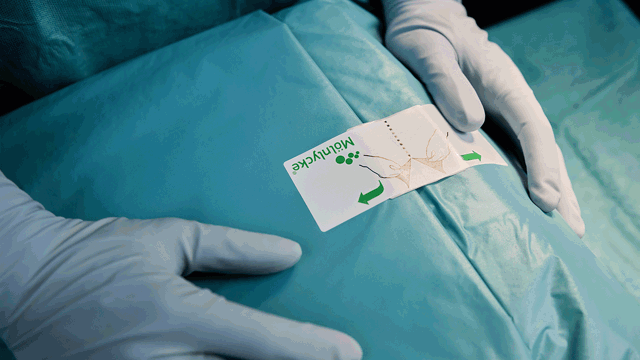
All BARRIER drapes are designed to contribute to patient and OR staff protection by providing a barrier against microbial migration. Effective infection control is achieved through impermeable materials where needed while effective fluid control is obtained through absorption or fluid collection pouches – allowing for a drier working area. All foldings are designed for optimal aseptic handling and easy application, which also contributes to infection control. The BARRIER products also come complete with the best available service and support including both training for optimal usage and tailored supply and logistic solutions all according to your need.
View our range of surgical drapes
Mölnlycke ProcedurePak procedure-specific packs

Playing a critical role in reducing the potential for infection is introducing pre-packed surgical procedure packs into the OR. Solutions like ProcedurePak offer a single package that contains everything needed to perform a specific surgery, including all required surgical instruments and procedure-specific surgical drapes and gowns. Not only does the efficiency of a single-packed solution lead to less set-up time13 in the OR with fewer packages to open, it lowers the risk for introducing bacteria into the OR and at the surgical site by creating less possibility for contamination14.