Clinical Challenge
To afford thorough debridement of non-viable tissue from the wound bed and manage wound odour and wound exudate whilst concomitantly minimising wound care-related pain and maintaining patient comfort.
Patient and Wound History
- 67-year-old male.
- Medical history of hypertension, chronic obstructive pulmonary disease and reflux.
- Recurrent foot ulcer on top of the right foot (possible origin of burn wound); present for 5 months.
- The wound area measured 35 cm2 with a depth of 0.5 cm. Wound exudation was low, non-viscous and clear/serous in appearance. Moderate increases in wound warmth, pain, and wound exudation alongside erythema were indicative of infection. The periwound skin exhibited areas of moderate dryness and maceration with mild to moderate erythema.
- The patient had a low tolerance to mechanical debridement. Anxiety around debridement procedures and anticipatory pain therefore limited the extent of treatment that could be performed in a single session.
Intervention and Treatment Regime
- Mepi™ Debripad (intervention), a microfibre pad selected for its fast, safe, and low-pain debridement of devitalised tissue from the wound bed while absorbing exudate and debris.
- The wound area was cleansed with warm water and Mepi™ Debripad was used to mechanically debride the wound and periwound areas.
- Enzyme alginate gel was applied to the wound and barrier cream was applied to the periwound before being dressed with an activated charcoal absorbent dressing; tape and a tubular retention bandage provided fixation.
- Dressing change was twice weekly.
| Debridgement Procedure | ||
|---|---|---|
| Before | After | |
| Visable tissue | 80% - hyperkeratosis on toes | 95% |
| Peri-wound |
Moderate dryness and maceration. Mild erythema |
Mild maceration and erythema |
| Pain severity prior to dressing change - 3 Pain severity during cleansing - 4 Pain severity during debridement - 4 |
|
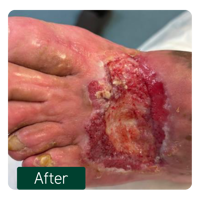 |
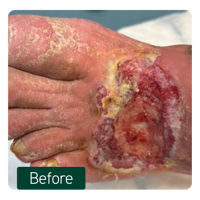
Clincian's Perspective
Mepi™ Debridpad was soft and comfortable, and the patient was able to tolerate its use thereby allowing for a more extensive debridement of the wound than had previously been possible. In addition, the pad’s flexibility enabled access to difficult areas. Overall Mepi™ Debripad facilitated a smooth and effective procedure for both patient and clinician.

Acknowledgement: This case study report has been prepared by Mölnlycke’s Global Medical Affairs team and is distributed with permission of the responsible clinician.
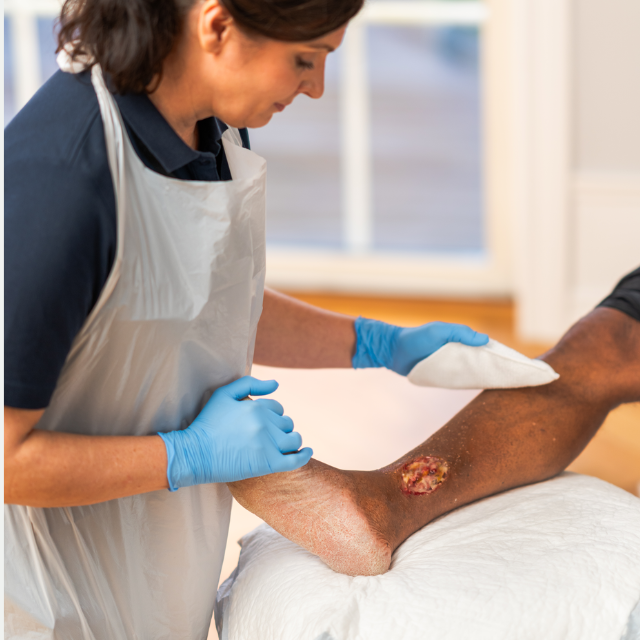
Learn more about Mepi™ Debripad
Mepi™ Debripad is Mölnlycke’s easy-to-use microfibre pad for safe, fast and low-pain mechanical debridement. It requires no specialist training and can be used as a standalone treatment or as a complement to sharp or chemical debridement.