Burn treatment
Gentle care for burns
Effective burn healing for faster recovery
Most burns are painful and can even be life-changing for the patient. With the right burn treatment and therapies throughout the healing journey, we can help patients return to daily life faster.
Our approach to healing burns
Talk to our experts
To create a positive impact, we build mutually beneficial relationships with employees, customers and the people in our communities.
Start your conversation here-
References
- Van Overschelde, P. et al. A randomised controlled trial comparing two wound dressings used after elective hip and knee arthroplasty. Poster presentation at 5th Congress of the WUWHS, Florence, Italy, 2016.
- Silverstein P. et al. An open, parallel, randomized, comparative, multicenter study to evaluate the cost-effectiveness, performance, tolerance, and safety of a silver-containing soft silicone foam. Journal of Burn Care and Research, 2011.
- Gee Kee E.L. et al. Randomized controlled trial of three burns dressings for partial thickness burns in children. Burns, 2015.
- David F. et al. A randomised, controlled, non-inferiority trial comparing the performance of a soft silicone-coated wound contact layer (Mepitel One) with a lipidocolloid wound contact layer (UrgoTul) in the treatment of acute wounds. International Wound Journal, 2017.
- Patton M.L. et al.. An open, prospective, randomized pilot investigation evaluating pain with the use of a soft silicone wound contact layer vs bridal veil and staples on split thickness skin grafts as a primary dressing. Journal of burn care & research, 2013
- Bredow J. et al. Evaluation of Absorbent Versus Conventional Wound Dressing. A Randomized Controlled Study in Orthopedic Surgery. Deutsche Arzteblatt International, 2018.
- Meaume S. et al. A study to compare a new self-adherent soft silicone dressing with a self-adherent polymer dressing in stage II pressure ulcers. Ostomy Wound Management, 2003.
- Gotschall C.S. et al. Prospective, randomized study of the efficacy of Mepitel on children with partial-thickness scalds. Journal of Burn Care & Rehabilitation, 1998.
- Upton D, Solowiej K. Pain and stress as contributors to delayed wound healing. Wound Practice and Research 2010, 18(3): 114-122.
- Gee Kee EL, Stockton K, Kimble RM et al. Cost-effectiveness of silver dressings for paediatric partial thickness burns: An economic evaluation from a randomized controlled trial. Burns 2017, 43(4): 724-732.
- Aggarwala S, Harish V, Roberts S et al. Treatment of partial thickness burns: a prospective, randomised controlled trial comparing Biobrane, Acticoat, Mepilex Ag and Aquacel Ag. J Burn Care Res 2020, 42(5): 934-43.
- Tang H, Lv G, Fu J et al. An open, parallel, randomized, comparative, multicenter investigation evaluating the efficacy and tolerability of Mepilex Ag versus silver sulfadiazine in the treatment of deep partial-thickness burn injuries. J Trauma Acute Care Surg 2015, 78(5): 1000-1007.
Related articles
Read all-

Article|1 min From awareness to action: putting pressure injury prevention into practice
Stop Pressure Ulcer Day brings global attention to the impact pressure injuries have on patients, healthcare professionals and healthcare systems. But awareness is only the beginning. Preventing pressure injuries takes knowledge, consistent action and people who make prevention part of everyday clinical practice.
- Pressure injury management
-

Article|3 min Understanding, preventing and managing skin tears
Skin tears are painful and distressing injuries that occur more often than people may realise. Unfortunately, a lack of awareness about what causes skin tears can lead to misidentification and mistreatment which in turn, can lead to pain and suffering.
- Skin tears
-

Article|2 min The lightest touch: for people living with epidermolysis bullosa (EB)
EB covers a group of rare skin disorders characterised by fragile skin that can blister or tear in response to everyday friction. It affects an estimated 500,000 people worldwide1.
- Epidermolysis bullosa (EB)
-

Article|1 min What can I do to support my venous leg ulcer?
While your nurse or doctor helps you with the right treatment plan for your venous leg ulcer, the choices you make every day at home can support healing. Small, consistent actions and daily choices to help your leg ulcer healing at home will improve your health and wellbeing. Maintaining healthy habits, such as eating and drinking well and staying active, can help reduce the risk of your venous leg ulcer recurring after it has healed.
- Venous leg ulcers
-
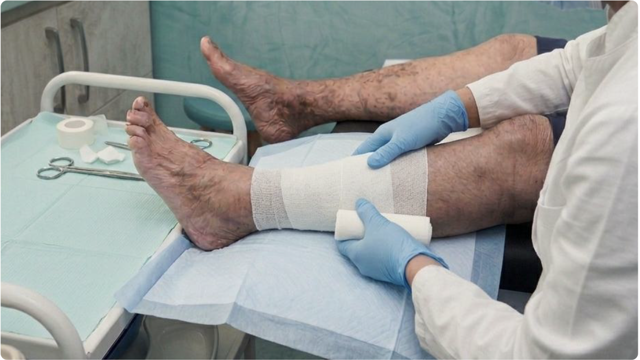
Article|1 min Why compression therapy is important
You may be wondering why you need compression therapy. Compression therapy is a key phase for venous leg ulcer treatment because it improves blood flow, reduces swelling, and helps the ulcer to heal. Wearing your compression therapy as advised by your doctor or nurse can also help reduce the risk of ulcers returning.
- Venous leg ulcers
-
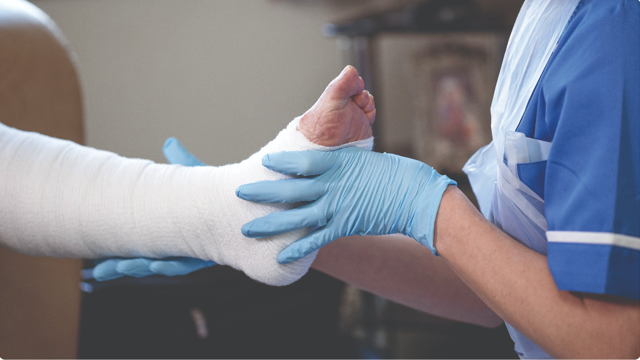
Article|1 min Signs of an infected venous leg ulcer
What is a venous leg ulcer? A venous leg ulcer is an open wound on your lower leg or ancle that hasn't healed after two weeks. It can happen if veins in the legs are weakened. Our veins carry blood back to the heart, with the help of small valves to keep it flowing in the right direction.
- Venous leg ulcers
-

Article|1 min When gentle matters most: a parents’ guide for children recovering from partial thickness (second degree) burns
This guide is for parents and carers, to help you understand and support your child’s healing journey, from hospital care to recovery at home.
- Burn treatment
-

Article|1 min How can I tell if I have an infection?
- Infection prevention
-

Article|2 min Support your healing by making the right choices
- Wound cleansing