Elevating Patient Bathing Standards
Learn more about us-
OUR HIBI® BRAND
We aim to create a world without Healthcare Associated Infections
Providing healthcare professionals with easy-to-use, effective solutions to remove microorganisms from the skin, elevating their patient bathing standards.Hibi® combines HibiClens® and the Hibi® Universal Bathing System to deliver a rinse-based CHG protocol that’s trusted by clinicians and supported by clinical evidence.
Not a healthcare professional? Visit our consumer site here
-
Lasting Protection & Simplified Care: Our 4% CHG solution, along with our dry washcloths, provides lasting protection by binding to the skin even after rinsing, while simplifying patient bathing protocols without the need for special storage or warming machines.
Comprehensive Solutions: Observational studies reveal that adding daily patient bathing to infection prevention protocols effectively reduces HAI rates. From Pre-op to post-op our Hibiclens and Hibi Universal Bathing System solutions are designed to provide patient satisfaction while supporting these protocols to help reduce HAIs. 1,2
Skin-Friendly: Our products offer powerful antiseptic action with low skin irritability, ensuring comfort and confidence for patients.3
-

1 in 31 hospital patients has at least one healthcare- associated infection.1
-

Patients with SSI have 2-11 times higher risk of death compared to operative patients without SSI.5
-

60% of Surgical Site Infections are preventable.6
Talk to a Hibi® Specialist
The Complete Solution: HibiClens® + Hibi® Universal Bathing System (HUBS)

A hospital-grade antiseptic skin cleanser with 4% chlorhexidine gluconate (CHG) that binds to the skin, providing long-lasting antimicrobial protection.

A patient bathing system with dry, disposable washcloths for use with rinse-based skin cleansing solutions like HibiClens® — a more complete, comfortable, and consistent alternative to CHG wipes.
Elevated bathing practices, backed by research
-
Hibi® products aren’t just effective — they’re proven. From hospital-wide protocols to lab testing, HibiClens® and HUBS deliver consistent results that clinicians can trust.
What the data shows
-

In an observational study, the implementation of a daily 4% CHG bathing protocol coincided with the significant reduction of HAIs by 52% across medical surgical ICU and 45% post-op telemetry unit.¹
-

70% of HAIs occur outside the ICU, highlighting the need for hospital-wide protocols.7,16
-

Every intra-hospital patient transfer increases HAI risk by 9%, underscoring the value of consistent cleansing.7,17
-

One hospital implementing Hibi® protocols house-wide reported over $500,000 in annual cost avoidance tied to reduced infection rates.8 Also, a study comparing CHG skin concentrations using 2% CHG wipes and 4% CHG foam found a significant difference in cost efficiency per bath, with 4% CHG foam being more cost-efficient than 2% CHG wipes.15
-

In a study, HibiClens® demonstrated higher cleansing abilities compared to a private label alternative, using an in-vitro synthetic sebum model. Researchers simulated the cleansing process and found that HibiClens was able to completely emulsify the synthetic sebum under the conditions of the test, while the private label alternative did not produce any emulsification.9
-

In a 14-day study, HibiClens® had the lowest irritation rating (Class 2) among all CHG cleansers tested.10
Explore The Evidence
-
Superior Skin Cleansing in the Lab
In a study, HibiClens® demonstrated higher cleansing abilities compared to a private label alternative, using an in-vitro synthetic sebum model. Researchers simulated the cleansing process and found that HibiClens® was able to completely emulsify the synthetic sebum under the conditions of the test, while the private label alternative did not produce any emulsification.9
-

Gentler Than Private-Label CHG
In independent irritation testing, HibiClens® scored Class 2 — “probably mild in normal use” — while others scored Class 3–4.10
-

System-Wide Savings
One hospital saw more than $500K in annual cost avoidance by adopting Hibi® protocols across departments.8
-

HAIs Aren’t Just an ICU Problem
Standardizing CHG bathing across all units can support your facility in maintaining consistent care practices, especially since 70% of HAIs occur outside the ICU.7
-
What sets Hibi solutions apart from other CHG options
While many solutions might seem convenient, HibiClens and Hibi Universal Bathing System stands apart, helping your team deiver an elevating bathing experience.
- More cost effective
- More clinical uses
- Less residue
Hibiclens + Hubs
CHG Wipes (Competitor Class)
Private Label CHG
CHG Strength
4%
2%
4%
Requires Rinse
Yes
No
Yes
Skin Irritation Score
Lowest
(Class 2)9Moderate
High9
Emulsifies Dirt/Sebum
Yes10
No
No10
Leaves Sticky Residue
No
Yes
Sometimes
Cost-Efficiency
High
Variable
Variable
Patient Comfort
High
Mixed
Mixed
Clinical Use Cases
Whole-hospital standardization
Limited to
specific wardsMixed
-
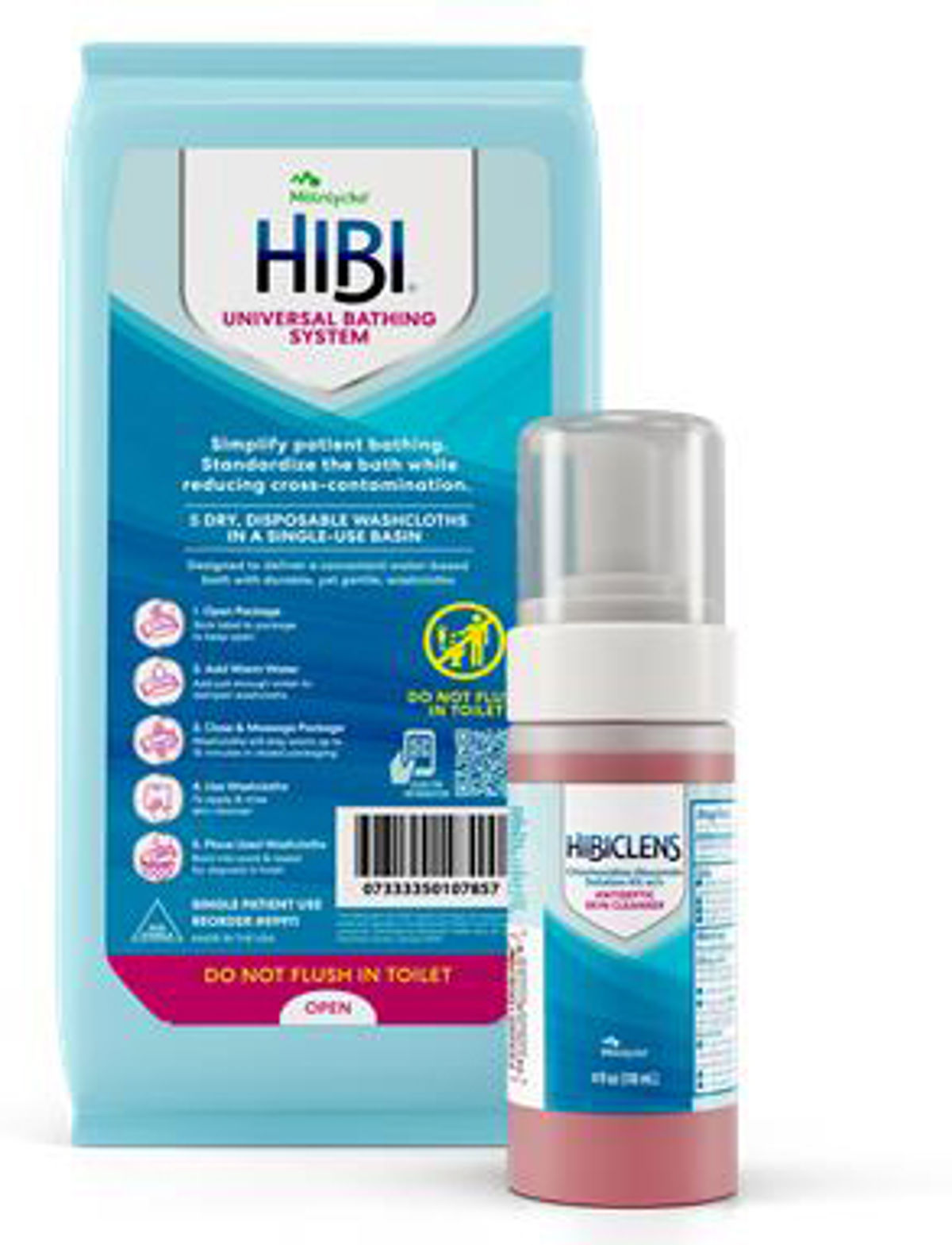
How to use HibiClens® with HUBS(11)
-

Gather Materials: One HUBS pack and a bottle of HibiClens® 4% CHG cleanser.

Add Water: Open the HUBS pack and add 16–20 oz of warm water to saturatecloths. Reclose and massage the pack to ensure better distribution of the water.

Apply Cleanser: Dispense HibiClens® directly onto the patient’s skin or on one side of the washcloth before cleansing. Avoid saturating all cloths, as some will be used for rinsing. Use the amount appropriate for the patient’s needs. 
Clean Patient: Follow your facility’s preferred zone-based or head-to-toe protocol. 
Rinse Thoroughly: After cleansing, flip the same cloth from the HUBS pack to its clean side and use it to rinse each area. 
Dispose Properly: Place used cloths back into the package and discard according to your facility’s protocol. -
Important: Avoid contact with eyes, ears, mouth, or broken skin. Follow IFU on label.
Elevating the standard of care across units
-
ICU: Integrate a rinse-based CHG skin cleanser into daily care protocols to support decolonization efforts and prevent cross-contamination.7
-
OR: Can be used as a rinse-based chlorhexidine surgical scrub option by surgeons before entering the operation room.
-
Preoperative Care: Instruct patients to bathe the night before and morning of the surgery with a skin cleansing solution like HibiClens®, as part of their chlorhexidine surgical skin prep routine for optimal SSI prevention.12
-
Oncology: Offer a gentle antiseptic skin cleanser for immunocompromised patients where CHG wipes may cause irritation or leave residue.13
-
General Medical Wards: Adopt a standardized chlorhexidine wash protocol with HibiClens® and HUBS to reduce variability in care and support whole-hospital infection prevention.7
-
Outpatient Surgical Centers: Use CHG skin cleanser protocols to improve patient experience while meeting infection control standards pre-discharge.2
Frequently Asked Questions
-
How does HibiClens® differ from standard CHG wipes?
HibiClens® is a 4% chlorhexidine gluconate (CHG) skin cleanser that, when used with HUBS, supports a full wash-lather-rinse routine, giving patients the feeling of a real bath. Unlike CHG wipes, our solutions use a rinse-based process that also helps remove spores and debris from skin, supporting a thorough, consistent cleansing.
-
What is HUBS exactly?
The Hibi® Universal Bathing System (HUBS) is a patient bathing system with dry, disposable washcloths that can be used with a skin cleansing solution like HibiClens®. It standardizes bedside bathing while supporting infection prevention protocols across care settings.
-
Why is rinsing important in CHG bathing?
Rinsing physically removes dirt, debris, and spores from skin. For infections like C. difficile, where CHG alone is insufficient, a full rinse is essential, especially since wipe-only methods have shown limited efficacy.14
-
Is HibiClens® safe for daily use?
Yes. In irritation studies, it scored the lowest among all tested CHG products, earning a Class 2 rating: “Probably mild in normal use.”10 Incorporating daily bathing into care routines is one way facilities can support consistent hygiene and infection prevention efforts.
-
Can HibiClens® be used for pre-op and post-op bathing?
Yes. HibiClens® is widely used in surgical site infection (SSI) bundles to help reduce infection risk before and after procedures.
-
How does Hibi® support whole-hospital standardization?
With the Hibi® Universal Bathing System (HUBS) and HibiClens®, clinicians can implement one rinse-based protocol across multiple units, reducing variability and confusion.
-
What’s the cost benefit of switching from CHG wipes to HibiClens® with HUBS?
While wipes might seem less expensive upfront, they’re typically single-use per patient bath, whereas a single bottle of HibiClens® can support two to three bathing sessions.
A study comparing CHG skin concentrations using 2% CHG wipes and 4% CHG foam found a significant difference in cost efficiency per bath, with 4% CHG foam being more cost-efficient than 2% CHG wipes.15
-
Does HibiClens® have higher quality than private-label CHG cleansers?
Yes. In lab studies, HibiClens® outperformed private-label alternatives in breaking down sebum and oil, indicating stronger cleansing power.
-
Can HUBS be used in place of CHG wipes?
Yes — when paired with a skin cleanser like HibiClens®, the Hibi® Universal Bathing System (HUBS) provides a rinse-based alternative that avoids sticky residue and elevates hygiene outcomes.
-
How does Hibi® support infection prevention?
Hibi® supports efforts to reduce HAIs hospital-wide by providing consistent, effective, rinse-based cleansing across all patient types and departments.7
Testimonials
-
Dr. Linda Mckinley
-
Dr. Jackson Musuuza
-
References
- Chapman, L., et al. Chlorhexidine Gluconate Bathing Program to Reduce Health Care–Associated Infections in Both Critically Ill and Non–Critically Ill Patients. Critical Care Nurse, 2021.
- Bathing Basics eBook. Mölnlycke Health Care. 2023.
- The Joint Commission’s NPSG.07.05.01: Prevention of Surgical Site Infections Report: https://www.jointcommission.org/-/media/tjc/documents/resources/hai/implementation_guide_for_npsg_ssipdf.pdf
- CDC’s 2022 National and State Healthcare-Associated Infections (HAI) Progress Report - https://www.cdc.gov/healthcare-associated-infections/php/data/index.html
- Strategies to Prevent Surgical Site Infections in Acute-Care Hospitals: 2022 Update: Michael S. Calderwood MD, MPH1,a, Deverick J. Anderson MD, MPH2,a , Dale W. Bratzler DO, MPH3,E. Patchen Dellinger MD4 , Sylvia Garcia-Houchins RN, MBA, CIC5, Lisa L. Maragakis MD, MPH6 ,Ann-Christine Nyquist MD, MSPH7, Kiran M. Perkins MD, MPH8, Michael Anne Preas RN, MS, CIC9 ,Lisa Saiman MD, MPH10 , Joshua K. Schaffzin MD, PhD11 , Marin Schweizer PhD12 , Deborah S. Yokoe MD, MPH13and Keith S. Kaye MD, MPH14,b.
- Hibi Total Value 2024 Brochure – 2024
- MHG077_Hidden Risk Factors eBook, Mölnlycke Health Care, 2023.
- Lavalette, P., Steves, D. Utilizing a Business Case to Link Reduction in Infections to Reduction in Costs, APIC Poster Presentation, 2019.
- Modelling Cleansing Power in Skin Antiseptics via an In-Vitro Synthetic Sebum Model, Mölnlycke Health Care, 2024.
- 1Irritation Study Summary, Mölnlycke Health Care, 2017.
- Adapted from the Hibi® Universal Bathing System Instructions for Use and HibiClens® Application Instructions, Mölnlycke Health Care, 2023.
- Hibiclens® FAQ Booklet. Mölnlycke Health Care. 2020.
- Briere, H., & Chapman, B. (n.d.). Chlorhexidine Gluconate Bathing Tolerance in Bone Marrow Transplant and Leukemic Patients. Bone Marrow Transplant Unit, University Hospital at SUNY Upstate Medical University, Syracuse, NY.
- Kassakian SZ, Mermel LA, Jefferson JA, et al. Impact of Chlorhexidine Bathing on Hospital-Acquired Infections among General Medical Patients. Infect Control Hosp Epidemiol. 2011;32(3):238-243.
- Hankins et al. Prospective, crossover, comparative study of two methods of chlorhexidine bathing. ICHE. 2025
- National and State Healthcare Associated Infections Progress Report,” Centers for Disease Control and Prevention, 2016.
- Boncea, Emanuela Estera et al. “Association between intrahospital transfer and hospital-acquired infection in the elderly: a retrospective case-control study in a UK hospital network.” BMJ quality & safety vol. 30,6 (2021): 457-466. doi:10.1136/bmjqs-2020-012124