Effective post-operative incision care is crucial for promoting optimal wound healing and minimizing complications, such as surgical site infections (SSIs) and surgical wound dehiscence (SWD). A key component of this care is the selection of appropriate post-op dressings that support long wear time and adopting a dressing change protocol that supports undisturbed healing. This article looks at findings from a series of international consensus meetings, highlighting best practices in incision care and dressing selection and care protocol to facilitate undisturbed wound healing.
Understanding undisturbed wound healing
Undisturbed wound healing refers to the process by which a surgical incision heals without unnecessary interference or disturbance, including frequent dressing changes. Maintaining a stable wound environment is essential, as frequent dressing changes or external disruptions can impede the natural healing process, increase the risk of infection, and contribute to patient discomfort. The goal is to create conditions that allow the wound to progress through the normal stages of healing efficiently.
Promoting uninterrupted wound healing and challenging traditional dressing changes
Traditional dressing change protocols rely on changing dressings on a schedule, whether or not a change is needed. This can unnecessarily disturb wound healing, potentially slowing or stopping healing entirely. Disturbing the wound exposes post-operative wounds to risk of contamination and increases the risk of a superficial surgical site infection (SSI). Post-operative dressing change protocols should be updated to align with evolving clinical evidence and best practices.
Traditionally, post-operative wound care is dominated by conventional dressings, typically comprising a non-woven with an acrylic adhesive and an absorbing pad. These dressings tend to be low absorbing, lack barrier function and often cause painful skin damage. This type of dressing has been used for decades along with traditional protocols.
Charting a path toward undisturbed healing
Promoting undisturbed wound healing means challenging the 'it’s always been done this way' approach that relies on frequent dressing changes because the dressings lack sufficient absorbency. From a broader perspective—including total cost of care and patient comfort—the traditional approach to post-operative dressing carries significant drawbacks. These include increased risk of contamination, higher costs due to material use and clinical time, disrupted and delayed healing, as well as greater patient discomfort and pain.
Consensus recommendations on incision care
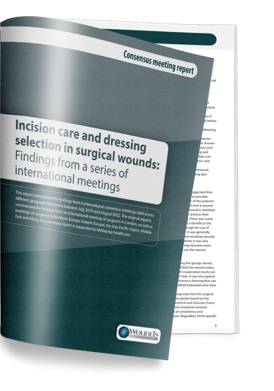
These kinds of questions were discussed by a team of senior surgeons who came together to ask how post-operative dressing challenges could be better handled. The conclusions were published as Incision care and dressing selection in surgical wounds: Findings from an international meeting of surgeons.
In addition to focusing on the importance of undisturbed wound healing, the international consensus group also highlighted the critical need to rethink post-op dressing protocols for optimal healing.
The consensus meetings yielded valuable insights into best practices for incision care:
- Preoperative optimization: Assess and optimize patient factors such as nutrition, glycemic control, and smoking cessation to optimize healing potential.
- Aseptic technique: Enforce strict aseptic techniques during surgery to minimize contamination.
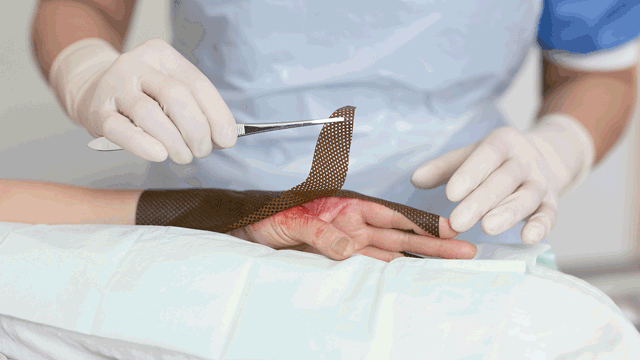
- Dressing application: Apply dressings in a manner that ensures full coverage of the incision without tension, preventing potential entry points for pathogens.
- Monitoring and assessment: Regularly assess the wound for signs of infection or other complications, but avoid unnecessary dressing changes if the dressing remains intact and exudate levels are manageable. The consensus found that dressings are changed too frequently and should only be changed when there is a clinically relevant reason to do so, such as saturated or leaking dressing, excessive bleeding, suspected infection, or potential dehiscence. Otherwise, leave the dressing in place to promote undisturbed wound healing.
- Patient education: Educate patients on signs of infection, proper wound care, and the importance of minimizing disturbance to the wound site. Patients often have preconceived ideas of how often a dressing should be changed, i.e., too frequently, and will also benefit from learning the value of undisturbed wound healing. Clinicians should share the rationale and benefits of undisturbed wound healing with patients and be able to communicate these reasons effectively.
Ideal post-op dressing protocol
The World Union of Healing Societies (WUWHS) recommends using a dressing that allows for a long wear time in order to promote undisturbed wound healing. Because current surgical post-op dressing change protocols can depend so much on routine and unnecessary dressing changes, the goal is to change the mindset to move away from scheduled/unnecessary dressing changes and move towards promoting undisturbed wound healing with dressing changes based on clinical need.
The role of dressing selection in undisturbed wound healing
Choosing the appropriate dressing is essential for promoting undisturbed wound healing. An ideal post-operative dressing should:
- Be flexible (not limit the patient’s movement), providing elasticity to avoid pulling the skin or blistering (e.g. particularly over knee, hip and shoulder joints)
- Adhere well to the skin at the time of application, including in cases where the wound area has been recently disinfected
- Absorbent, able to handle exudate
- Protect the skin (e.g. reduce the risk of blistering or irritation, not excessively
adhesive) - Waterproof: providing a seal/barrier function and enabling the patient to shower
- Maintain close contact with the wound surface, eliminating dead space that could impede healing
Undisturbed wound healing: The goal of modern post-operative incision care
Undisturbed wound healing is a primary goal of modern post-operative incision care. By selecting appropriate dressings and adhering to best practices focused on undisurbed wound healing, healthcare providers can create an optimal incision healing environment, reduce the risk of complications, and improve patient outcomes. Ongoing education and patient engagement are essential components of effective incision management strategies.