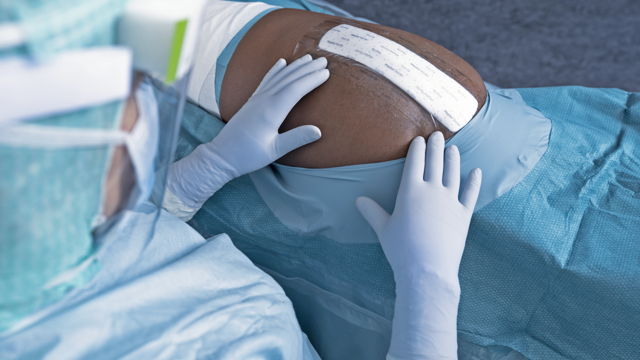
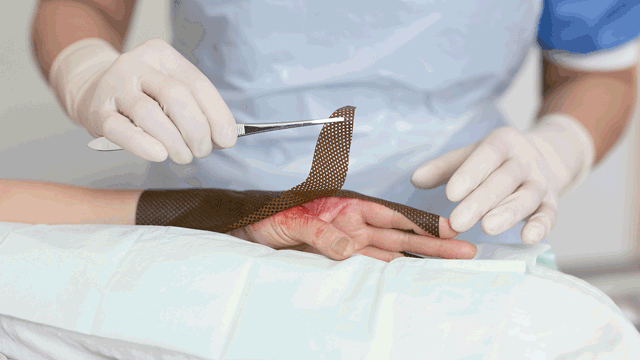
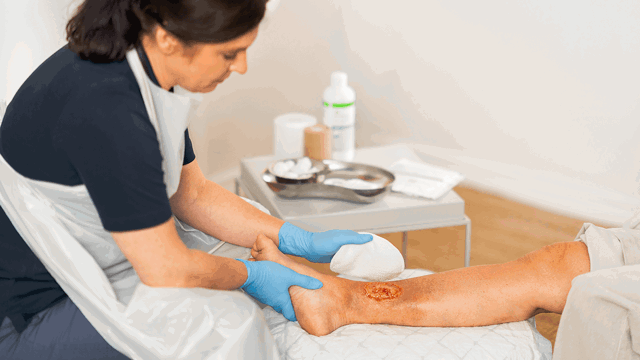
Pressure injury severity assessment is based on the 2025 International Guidelines, pressure injury classification and requires the clinician to determine the depth of the injury based on visual inspection of the wound and in the case of a Stage 1 pressure injury, where this is intact skin with a localized area of non-blanchable erythema which may appear differently in darkly pigmented skin. It should be noted that in many cases a pressure injury will develop over a bony prominence such as the heel or the sacrum (most common sites for pressure injuries). Following initial staging of the pressure injury the clinician needs to verify the history of the wound in terms of how and when it was developed and the patient’s understanding of the wound and its causation. Note should be made of the degree of pain experienced by the patient related to the wound as well as any systemic signs of infection.
Staging
Stage 1
Intact skin with a localized area of non-blanchable erythema, which may appear differently in darkly pigmented skin. Presence of blanchable erythema or changes in sensation, temperature, or firmness may precede visual changes. Color changes do not include purple or maroon discoloration; these may indicate deep tissue pressure injury.
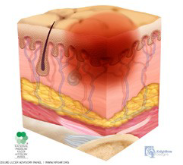
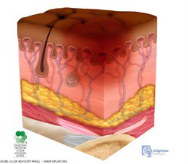
Stage 2
Partial-thickness skin loss with exposed dermis. The wound bed is viable, pink or red, moist, and may also present as an intact or ruptured serum filled blister. Adipose (fat) is not visible and deeper tissues are not visible. Granulation tissue, slough and eschar are not present. These injuries commonly result from adverse microclimate and shear in the skin over the pelvis and shear in the heel.
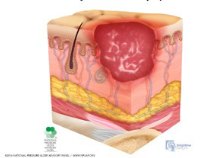
Stage 3
Full-thickness loss of skin, in which adipose (fat) is visible in the ulcer and granulation tissue and epibole (rolled wound edges) are often present. Slough and/or eschar may be visible. The depth of tissue damage varies by anatomical location; areas of significant adiposity can develop deep wounds. Undermining and tunneling may occur. Fascia, muscle, tendon, ligament, cartilage or bone is not exposed. If slough or eschar obscures the extent of tissue loss this is an Unstageable Pressure Injury.
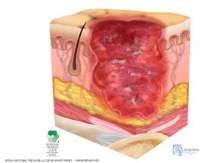
Stage 4
Full-thickness skin and tissue loss with exposed or directly palpable fascia, muscle, tendon, ligament, cartilage or bone in the ulcer. Slough and/or eschar may be visible. Epibole (rolled edges), undermining and/or tunneling often occur. Depth varies by anatomical location. If slough or eschar obscures the extent of tissue loss this is an Unstageable Pressure Injury.
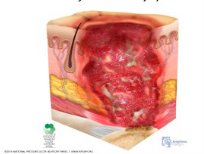
Unstageable
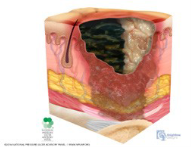
Full-thickness skin and tissue loss in which the extent of tissue damage within the ulcer cannot be confirmed because it is obscured by slough or eschar. If slough or eschar is removed, a Stage 3 or Stage 4 pressure injury will be revealed. Stable eschar (i.e., dry, adherent, intact without erythema or fluctuance) on an ischemic limb or the heel(s) should not be softened or removed.
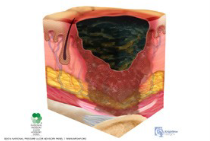
Suspected Deep Tissue
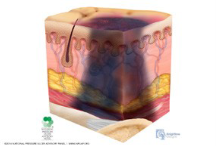
Deep Tissue Pressure Injury Intact or non-intact skin with localized area of persistent non-blanchable deep red, maroon, or purple discoloration or epidermal separation revealing a dark wound bed or blood-filled blister. Pain and temperature change often precede skin color changes. Discoloration may appear differently in darkly pigmented skin. This injury results from intense and/or prolonged pressure and shear forces at the bone-muscle interface.
Assessment for all stages
Location - Document anatomical location of PI
Tissue Type - Determine the characteristics of wound bed, noting the visible tissue which may include pink epithelialization tissue, red granulation tissue, yellow slough, black necrotic tissue
Exudate - Determine the type, amount and nature of wound exudate which may include, serous, serosanguinous, purulent and or viscous fluid
Odor - Note the presence of malodor from the wound
Wound Edge - Observe for undermining of the wound edges or any tunnelling which may be present
Peri wound - Describe the condition of the skin surrounding the wound and observe for maceration and inflammation
Infection - Assess for overt signs of wound infection
Medical Device-Related Pressure Injury (MDRPI) - This describes an etiology. Medical device related pressure injuries result from the use of devices designed and applied for diagnostic or therapeutic purposes. The resultant pressure injury generally conforms to the pattern or shape of the device. The injury should be staged using the staging system.
Mucosal Membrane Pressure Injury - Mucosal membrane pressure injury is found on mucous membranes with a history of a medical device in use at the location of the injury. Due to the anatomy of the tissue these ulcers cannot be staged.
Document findings in individuals medical record (EMR)
*European Pressure Ulcer Advisory Panel, National Pressue Injury Advisory Panel and Pan Pacific Pressure Injury Alliance. Prevention and Treatment of Pressue Ulcers/Injuries: Clinical Practice Guideline. The International Guideline. Emily Haesler (Ed.). EPUAP/NPIAP/PPPIA: 2019.