Burn care
Information for health care professionals
Burns are a challenging wound type, associated with a complex burn care continuum.
Burn care across all burn wound healing stages, including burn scar management, demands a deeper understanding of burn care and research. At Mölnlycke, we are committed to supporting you in your learning, professional education and daily clinical practice.
-
How to choose a dressing for burns
Different burn dressings and dressing protocols address different burn needs:
- For superficial partial-thickness burns, burn dressings should be left on the wound for long periods of time (at least one week), until healing3, 4
- Partial-thickness burns have moderate to high exudate levels where foams and alginates can be an option4
- Antimicrobial dressings for burns, such as silver dressings, may be used prophylactically as a barrier to microorganisms5
-
-
Survey of global experts on the “ideal burn dressing”
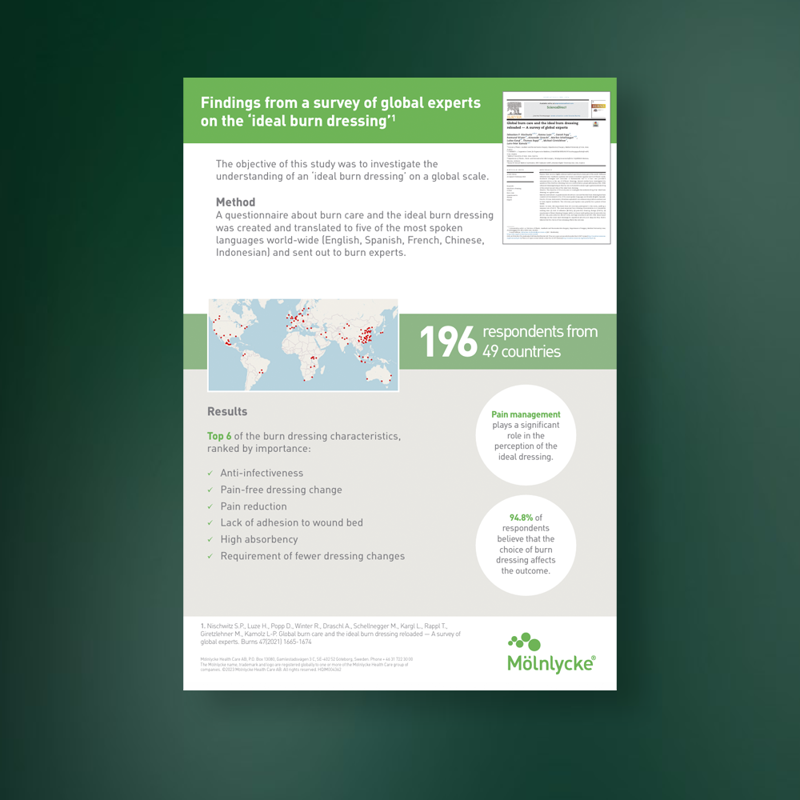
In 2021, a survey among global experts on the “ideal burn dressing” was published. The objective of this study was to investigate what dressing is most appropriate for a burn on a global scale via a questionnaire. 196 experts from 49 countries participated in the survey.7
The results of the study show:
- Pain management plays a significant role in the perception of the ideal dressing
- Silver-based dressings are the most used dressings for superficial (45.2%) and
deep burns (52.8%) - 94.8% believe that the choice of burn dressing affects the outcome
The top 6 burn dressing characteristics, ranked by importance:
- Anti-infectiveness
- Pain-free dressing change
- Pain reduction
- Lack of adhesion to wound bed
- High absorbency
- Requirement of fewer dressing changes
-
-
Mepilex Ag – a proven solution for partial thickness burns
Mepilex Ag is a versatile and soft antimicrobial foam dressing that absorbs exudate and maintains a moist wound environment – specifically developed to manage burns.2 The Safetac wound contact layer prevents the dressing from adhering to the wound bed, minimising pain and trauma during removal.2–3
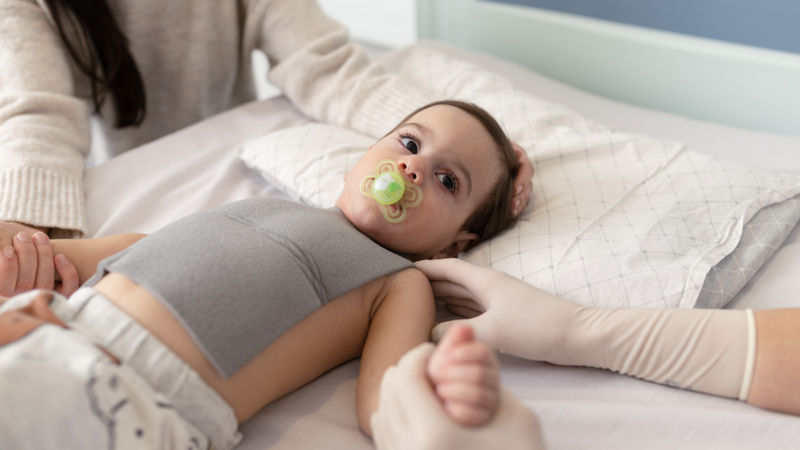
Mepilex Ag has been shown to contribute to reduced nursing time during first dressing application and reduced pain at removal in comparison to other dressing options in a paediatric population.2, 4 Compared to silver sulfadiazine, RCT results show that Mepilex® Ag leads to a shortened length of hospital stay, reduced pain and lower total cost of treatment.3
Testimonial
-
Mepilex Ag Dr. Foster Testimonial
Listen to burn surgeon Kevin Foster as he shares his clinical experiences using Mepilex Ag.
-
The ideal dressings for burn care
-
References
- Evans LH, Bhavsar D, Mailander P (2010) The biology of burn injury. Exp Dermatol 19(9): 777-83
- Warby R, Maani CV (2019) Burn Classification. Available from: https://www.ncbi.nlm.nih.gov/books/NBK539773/
- European Practice Guidelines for Burn Care. 2017
- ISBI Practice Guidelines for Burn Care, Part 1, 2016
- Wounds International. International consensus. Appropriate use of silver dressings in wounds. An expert working group consensus. London, UK: Wounds Int; 2012 [cited 14 Sep 2017]. URL: http://www.woundsinternational.com/media/issues/567/files/content_10381.pdf.
- Heyneman A. et al. The role of silver sulphadiazine in the conservative treatment of partial thickness burn wounds: A systematic review. Burns. 2016 42(7):1377-1386
- Nischwitz SP, Luze H, Popp D, Winter R, Draschl A, Schellnegger M, Kargl L, Rappl T, Giretzlehner M, Kamolz L-P. Global burn care and the ideal burn dressing reloaded — A survey of global experts. Findings from a survey of global experts on the ‘ideal burn dressing’ results. Burns. 2021 47:1665-1674.
Related articles
Read all-

Wound care | 2 min read Support your healing by making the right choices
-
Wound care | 5 min read Rethinking surgical incision care
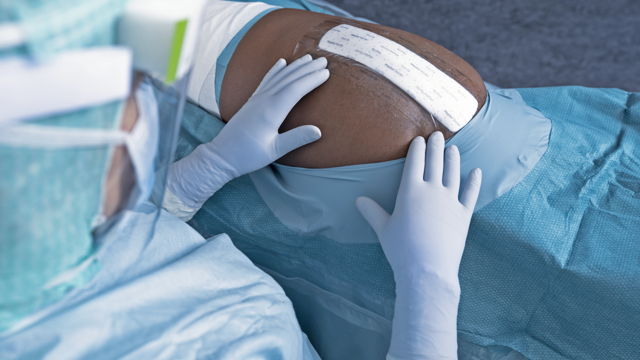
Undisturbed wound healing in post-surgical settings is a key focus for rethinking surgical incision care. Undisturbed wound healing is a principle that reduces patient mortality, improves recovery time, increases patients’ quality of life and reduces costs¹.
-
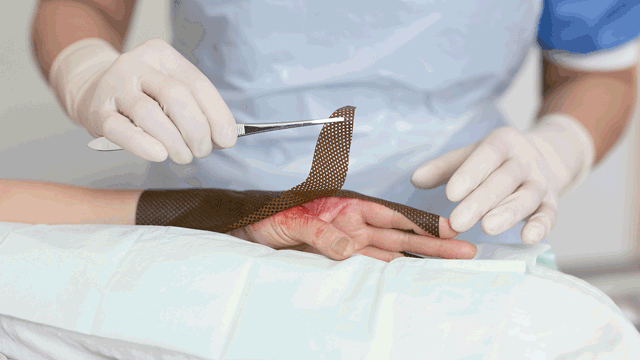
Wound care | 3 min read Cost-effectiveness of burn dressings
Cost-effectiveness is an important factor in implementing a treatment regimen for burns. Burn care is associated with high costs, but it is important to look beyond price-per-unit to consider the total cost of care and cost savings realised by fewer dressing changes, less nursing time required, and fewer pain relief medications.
-
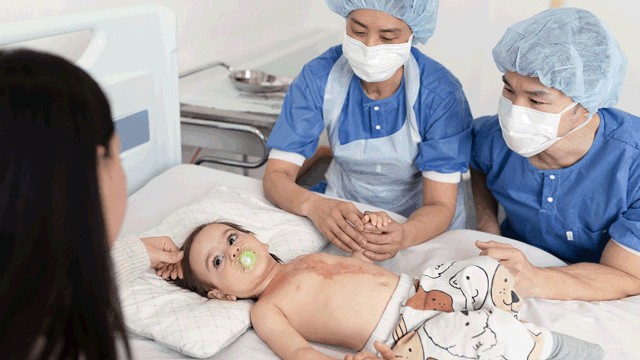
Wound care | 4 min read Making burn care less painful
Burn injuries affect millions globally each year and present trauma in the form of physical and psychological challenges during the healing process. The pain and trauma associated with burn care, particularly during dressing changes and also for those with sensitive and fragile skin, such as children and the elderly, is a focus of recent advancements in burn care, emphasizing the importance of minimizing pain during dressing changes and improving patient outcomes.
-
Wound care | 3 min read Tips and tricks to prevent pressure injuries in the OR: Setting up and running an OR pressure injury prevention program
Watch video -
Wound care | 2 min read Tips and tricks to prevent pressure injuries in the operating room: criteria for assessing patient risk
Watch video -

Wound care | 4 min read How to understand and treat Epidermolysis Bullosa (EB) and make dressing less distressing for patients
EB is a rare, inherited group of skin disorders characterised by extreme skin fragility. It is estimated to affect around 500,000 patients worldwide¹.
-
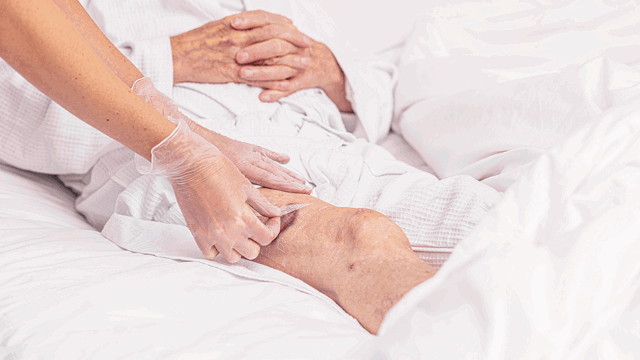
Wound care | 4 min read How being skin tear aware can help patients and clinicians understand and manage skin tears
Skin tears are painful and distressing injuries that occur more often than people may realize. Unfortunately, a lack of awareness about what causes skin tears can lead to misidentification and mistreatment which in turn, can lead to pain and suffering.
-
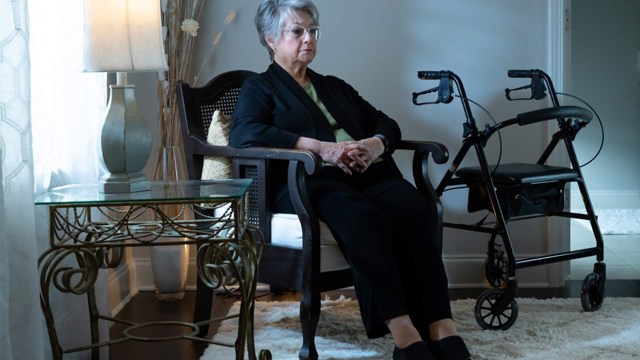
Wound care | 4 min read The impact of venous leg ulcers (VLUs) on the patient's quality of life
Venous leg ulcers can have a significant effect on the patient's quality of life. How can VLU management become better to improve the patient's quality of life and minimize the burden to healthcare systems? A Wounds International article explores the connection between venous ulcer management and the patient's quality of life.