Partner Connections Podcast:
Episode 5: Maximizing Value
Maximizing Value: Through Standardization and Utilization Strategies in Healthcare
-
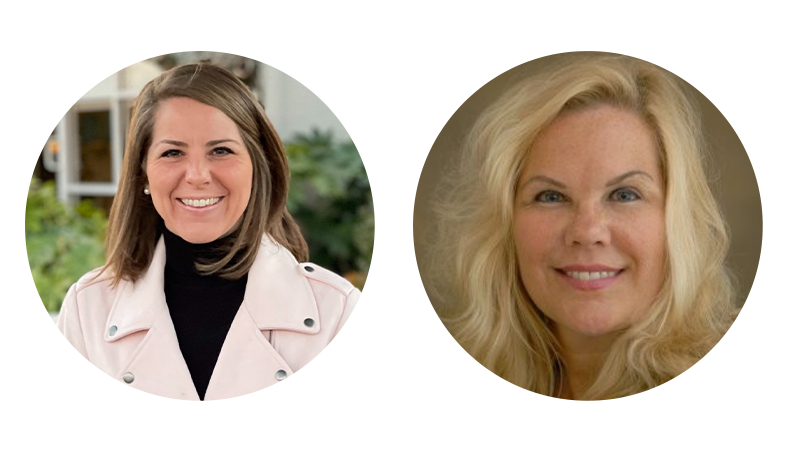
Join Hannah Cleveland BSN, RN, CWON and Dr. Lisa Grubb DNP, APRN, FNP-C, CWCN, C/DONA, CPHQ as they explore how healthcare organizations can improve patient outcomes, reduce clinical variation, and manage costs through standardization and utilization strategies. Drawing on decades of clinical and healthcare leadership experience, Dr. Grubb shares real-world examples of successful quality improvement initiatives, highlighting the importance of evidence-based practices, data-driven decision-making, and cross-functional collaboration to drive meaningful, lasting change.
-
Transcript
Hannah Cleveland 0:06
Hello, everyone. Welcome to this webcast tonight, Maximizing Value through Standardization and Utilization Strategies in Healthcare. So as you can see that we are on a Teams platform. So if you are not on mute, please mute yourself. You can be on camera if you like. And if you want to share where you're from in the chat box, feel free to. We're going to utilize the chat box in the Q&A section later on in this presentation.
Tation.
My name is Hannah Cleveland. I am a certified wound and ostomy nurse and I'm also one of the health economic solutions managers here at Monlica. Tonight, I will be your moderator and I will get started. So then I can hand it over to Lisa. So good evening, everyone. Thank you again for joining us. It is my pleasure to introduce our speaker, Dr. Lisa Grubb.
Dr. Grubb is an assistant professor at the John Hopkins University School of Nursing and serves as an advanced practice registered nurse on the burn and reconstructive surgery team at John Hopkins Bay View Medical Center. She brings more than 30 years of nursing experience, spanning across clinical practice,
healthcare leadership, patient safety, infection prevention, quality improvement, and academia. Throughout her career, Dr. Grubb has worn many different hats. She has worked in critical care, the operating room, and post-anesthesia recovery. She has served in executive leadership roles, overseeing long-term care operations across multiple sites,
of care, patient safety, stroke care, and health care quality for large academic medical centers. Today, she continues to advance her profession through her research, teaching, and clinical practice. What I find especially inspiring about Dr. Grubb journey is that each role has given her a different perspective on the challenges we face in health care.
Whether as a bedside clinician, a leader, an educator, a researcher, or a practitioner, she has seen firsthand that our approach to challenges often matter just as much as the challenges themselves. So as we begin tonight's webcast, I encourage all of you to think about your own career journey.
Whether you're just starting out in the healthcare profession or you've been serving patients and organizations for decades, we've all faced obstacles, changes, and moments that have stretched us professionally. But undoubtedly, more changes lie ahead. The good news is that those challenges can be met with perseverance, adaptability,
and collaboration. When we approach them as partners within our facility, our healthcare systems, rather than in working in silos, we create opportunities for meaningful improvement and better outcomes for the patients we serve. So with that, Dr. Lisa Grubb, I hand this over to you and thank you for coming tonight and sharing your insights and experiences.
Lisa Grubb 2:58
Thank you, Hannah.
So, here are my disclosures.
And as Hannah shared with you, what we're really going to talk about tonight are the challenges that we're facing as a healthcare team. And we're specifically going to look at how do we reduce clinical variation, how do we improve outcomes while managing costs, something everybody is absolutely focused on, and how do we truly build alignment across departments
and partner with our teams both inside our organization and outside our organization.
And how I'm going to share my journey with you tonight, I'm actually going to take a look back in time. So my eras, right? Taylor Swift had her eras, I'm going to have my eras. So I'm going to take you on a journey with what was facing us through each one of these positions.
how we came together as a team to really change the outcomes, be very patient-centered focused. And again, what challenge we had at that time. And I know that all of you are, we're all struggling with different things that we're facing in our country at this time. Certainly healthcare is at a precipice. But what I want you to think about as I share my journey
and our outcomes. And I'm sharing real data that I pulled out of all of my archives. And I think we'll have some really enlightening moments and some aha moments for all of you to really look back over the last 25 years to see what we truly have accomplished and what we
absolutely can accomplish as an amazing team in healthcare.
So the year is 2004, and what we are facing is the 100,000 Lives campaign. And I'm sure that all of you remember the 100,000 Lives campaign, which has progressed. And this was basically Don Berwick and colleagues and the IHI.
And again, really challenged our institutions across the United States to really focus on adverse outcomes and really focus on healthcare associated infections. And this was really the very first time that we were challenged with putting standardized protocols in place across care settings.
And they had several different protocols and several different clinical practice guidelines that they really wanted us to look at. Now, they wanted us to do this with absolutely maintaining our individual clinical judgment. But this was really the first time that, again, a body said to us, you need to do it like this.
So this is when I was hired to be the Director of Infection Prevention and Control. And it was really the very first time this institution had a Director of Infection Prevention and Control. And essentially, the Chief of Infectious Diseases and the Chief Nursing Officer were, I had two direct reports. And they basically said, your role and responsibility
is to put these IHI bundles in place. And we really were starting from scratch. And again, this was something very new to us. So this was absolutely what Medicare was finding was costing us the most money.
We were spending, we had a lot of readmissions, we had a lot of hospital acquired conditions. So these are the areas that, again, the Institute for Healthcare Improvement put together evidence-based protocols and told us, you need to put these things in place.
And this is where I want you to think about. Think about a world where you had 40 ventilator associated pneumonias in your ICUs. Well, we had 40 ventilator associated pneumonias in our ICU. That's where we started. So when I was putting this together, it was almost a...
take my breath away moment because I thought, oh my goodness, 40 ventilator associated pneumonias. We think about closing the hospital today, right? But we started with 40 ventilator associated pneumonias. So what I want to say to you is I know you think you're facing so many challenges, but I want you to take a step back
and think about where we came from and where we started and how far we've come along this journey. So we had 40 ventilator-associated pneumonias. By year three, we had two, so 95% reduction in our ventilator-associated pneumonias. And our central line-associated bloodstream infections, we had year one, we had 40
Team CLABSIs, again, kind of a take your breath away moment. And we were able to reduce that in year three to 10 central and associated. 10 CLABSIs, a 29% reduction, but still a long way to go. We were very proud of that outcome. And you want to say, well, how did you do that?
How did that work?
So again, I was the first director of infection prevention and control. My background at that point in time was I came from long-term care. I'd been in long-term care for almost 15 years.
So I had to learn a new language. So I built relationships. I got to know all the key members, all the team players. I spent a lot of time on the nursing units with the nurses, getting to know the nurse managers, getting to know the directors of nursing, what was important to them, making sure that from a one-on-one perspective,
With the Director of Infection Prevention and Control, they knew what the Institute for Healthcare Improvement Bundles were. They could speak to them. I did one-on-one education with them. I met with them at their staff meetings. We made certain that between the Chief of Infectious Diseases and the Chief Nursing Officer,
Again, we had executive expectation. We had big problems. We had 40 ventilator associated pneumonias, right? We had to do something about it. So we, I got to know all these individuals. We put teams together. We had consistent meetings. I encourage you when, again, when we did these,
When we focused on these areas, we would meet every two weeks and then we would whittle it down to whatever was appropriate. But our foundation was these evidence-based practice guidelines from the IHI and then any other clinical practice guidelines. And we were consistently talking to team members at the bedside. Remember,
Quality does not happen behind a computer. Quality happens at the bedside. You absolutely should.
we need to be out where the magic happens, right? We need to be out where we're providing patient care. We participated in rounds. We had a consistent mechanism of communication. We looked at our failure points when we had a ventilator-associated pneumonia. We pulled that apart. We did a root cause analysis.
We put it through the PDSA cycle so that we were constantly improving. And again, we had to report to the board on a monthly basis. So this was something that was very important to the organization. And we rose above. We did an absolutely fantastic job. We made a difference for the organization, and we certainly made a difference.
for the patients that we serve. So very, very proud of the work that I did, that we did during my tenure. So the second one we're going to talk about is improving outcomes while managing cost.
And this year is 2011. And what we're facing is the Hospital Engagement Network. And if you recall, this is a nationwide quality improvement project that CMS put in place. And it basically they put a call to action out to all the hospitals in the United States. It was not mandatory.
and more than 450 hospitals came together to really work on improving 11 harm areas and to improve 30 day readmissions. I was the director of quality at this is Johns Hopkins Bayview Medical Center. So again, this data is all mine. And these are this is
information that I had in my archives. So I started out at Johns Hopkins as a Director of Infection Prevention and Control in 2012. I was promoted to the Director of Quality in 2013 and stayed in that role for until 2017. And during this time,
Again, we joined the HEN Network.
And we were awarded $1.3 million by the state of Maryland because we overachieved our goals and we were able to reduce hospital-acquired conditions. We also were one of the top 10 hospitals, according to the HEN Network, to reduce readmissions in hospital-acquired conditions. So how did we do that?
Again, the 11 harm events.
that CMS.
put forth to all these hospitals that were again costing hospitals a lot of money. And also they were causing an increased amount of readmissions, adverse drug events, catheter associated urinary tract infections, central line associated bloodstream infections, falls, hospital acquired. Again, at that time, pressure ulcers.
early elective deliveries, OB harm, surgical site infections, and VTE.
So we had a problem with congestive heart failure and COPD with regards to our hospital readmissions.
So what we did is, again, I developed relationships and we got teams together, teams of experts. We talked to the staff on the units and we made certain that they absolutely knew that we were involved in this hospital engagement network, what the problems were. And this is an example of the communication tool.
that we use across Johns Hopkins Medicine. It's called an A3. I'm sure many of you are very, very familiar with this. But this is the mechanism of communication that we use from bedside to boardroom. And this really gives you the ability to what is the problem, what is the background, what is the goal, who's involved in the team,
What are we trying to accomplish? And then very clearly gives you your accomplishments month over month.
also helps you to identify and analyze what are your pain points? What are the areas that you absolutely need to improve? And then who's responsible for those areas? And again, consistent communication, consistent meetings with the team, and consistent feedback with all the data. And I think you can see we did an amazing job.
Our target was 100% and we were able to meet that target the majority of the time. And again, this was also an area that we had executive interest. So we reported this to our hospital board and also the system board for Johns Hopkins Medicine. So we had that executive oversight as well.
and executive buy-in.
Another example of our A3.
And again, want to share with you that this was our consistent mechanism of communication and our team members could all use this. So we would send this to our nurse managers and they would be able to share this with their staff at staff meetings. So the staff would absolutely know what are we focusing on, what's happening.
And there was very clear, consistent communication, again, from bedside to the boardroom.
We also focused on catheter-associated urinary tract infections and central line-associated CCLABSIs.
And this is a story that I am really, really proud of. And I think this really talks about and points out the value of relationships and the value of making sure that you're present at all opportunities to share information. I did a lot of work with the operating room. Again,
Another reason that I was awarded this position is because I had OR experience. And that's something that nurses, people are kind of afraid of the OR. And when you have operating room experience and can speak that language, it's a huge opportunity, a huge need.
And again, being an OR nurse, I was very comfortable and loved working with my OR colleagues. And I was included in all of the OR meetings.
So one of the OR meetings I was sharing with the team that we had a problem with catheter associated urinary tract infections. We had a new chief of orthopedics at the time, and he said, Lisa, we are going to work on this together. We are going to approach this together because the largest majority of our CAUTIs were in our surgical site.
patients. So he and I went offline, developed, pulled together a team of anesthesiologists, the other orthopedic surgeons, partners in the LR. We came together and his goal was to eliminate the use of catheters in the operating room in his joint patients. So you can see our data here.
where in May of 2015, we essentially didn't use catheters in our total joints. So we were able to essentially eliminate catheter-associated urinary tract infections in this population because we decided that we were going to address the catheter use. And by coming together as a team, speaking the same language, we very appropriately
got rid of catheters in the OR. And what we found is we were using catheters because that's the way we always did it. So we decided to take a different approach and had amazing outcomes with regards to CAUTIs as a result of that. Another way to look at our catheters, you can see 2013, 14, and 15. And again, you can see that we've almost eliminated
Cotties in 2015, so a story that I'm very, very proud of.
We also had great outcomes in our CLABSIs, and we had a variety of different teams who came together. Again, I'm not sure if all of you know, but we have a very busy burn unit at Johns Hopkins Bay View. So this basically shows you that we had a rate of five and went down to a little over one.
in several years. So again, something that we were constantly working on, constantly communicating, talking about our failures and our successes, communicating in a standard way, and we had amazing results.
And again, how do we do this? We did it the same way. We looked at the evidence-based practice and clinical practice guidelines. We made sure as a team that we were consistently communicating. We were constantly on the units. We were constantly talking to the OR team, constantly talking to the burn team.
using a consistent communication mechanism for bedside rounds, for meetings, for staff meetings. Again, this was a tool that we could send out.
to the nurse managers, they could easily inform their staff of what was going on, what were the clinical practice guidelines, what were we working to achieve. And we were constantly engaging our partners by sharing if we had a CLABSI, if we had a CAUTI, so that everybody could look at that, really pull it apart,
Compare.
what we were doing with the evidence-based practice guidelines. And when we found where we were out of line with those evidence-based practice guidelines, what we did is how can we fix that? How can we change this? And that is how we absolutely were able to sustain the gains over time because it wasn't ripping the band-aid off. It was something
where we were constantly looking at that information, and it was something that we did with a consistent use of the information and a consistent look at the evidence practice guidelines. And again, we had a lot of executive oversight and executive expectation, so we were able to have the resources that we needed. But the bottom line is we made a huge difference.
for patients in all of these areas. And again, awarded a lot of money that we were able to give back to the organization and won a lot of accolades throughout Johns Hopkins because of the work that we did as a team.
So the final story is my time at Johns Hopkins, Howard County, where I was the Senior Director of Quality and Patient Safety. And that was from 2017 to 2022 before I came to the university full time. So you all know what happened in that time frame, right? We all know the COVID time frame.
So the challenges that we faced during COVID.
And the story that I want to tell you here is that in the state of Maryland, we have a little bit of a unique reimbursement system where...
We do everything similar to CMS, but we have a case-based reimbursement system. So it's a little bit, a little bit unique to Maryland. And I say that because we did not have leapfrog in Maryland until 2017. So somehow we had.
gotten out of reporting Leapfrog. So Leapfrog became a big deal for us. And I know that you're all very familiar with Leapfrog and that you have 27 to 28 evidence-based national performance measures that you have to come together on in order to get this Leapfrog grade. And it's
It builds over time, so it's not something that you do in one period of time. So everything has to work together, and everybody has to be aware of their own system of working together and gathering and utilizing this data. So I'm very proud to tell you
that we were the only A in the state of Maryland.
And...
We were able to sustain that A throughout 2021. And then we didn't do it in 2022, I think, because of COVID. But we were able to sustain our gain. And that was a challenge for sure. I mean, once we got that A and we were all, you know, on top of the world by, you know, we have this A,
And I remember meeting with my boss and he said, you know, Lisa, now we have to sustain the A. So.
I'm sure many of you are familiar with the challenges of Leapfrog. Everything has to come together. So there is not a better story than Leapfrog to say that you absolutely have to work as a cohesive team and everybody needs to know what the other person is doing. And we have to come together.
Ask the questions, share the data, make certain that everybody understands the evidence-based practice and clinical practice guidelines so that we're all marching in the same direction and that we are utilizing the expertise that we have in caring for our team and caring for our patients. So very, very proud of this leapfrog work that we did.
And finally, I want to tell you a little bit about some work that I did, and this was my Doctoral of Nursing.
project and I found that in looking at all of this data that we had a problem with pressure injuries. And I found that we had that that I looked at the data and we had a safety meeting on a daily basis and where we would read our hero events.
It was my team that read the hero events, and every single day we had one or two that...
We would read the hero events and it would be a hospital acquired pressure injury that was found on admission to a medical surgical units. So when I looked at the data, I found that 34% of our patients in a sample population had either a stage one, stage two, or a deep tissue injury. And they were all patients who were admitted
from the ED. And when I really tightened that up, it was a population of patients who were 80 years old and over, again, admitted patients to the emergency department.
who had, who were acquiring these pressure injuries. So in digging into the literature and digging into the data found that the problem was in our emergency department and then found this throughout the literature that the ED was wide open, nobody was focused on the ED,
And I approached my chief nurse and my boss was then the vice president of medical affairs to see if I could work on this as a team and really take this apart because everybody's very nervous, right? It's the ED. Oh boy. And we were an incredibly busy emergency department.
70,000 ED visits a year. 70% of our patients who were admitted to the hospital came through our ED.
So again, at the evidence at the time, 2017, Dr. Joyce Black came out with a consensus panel to utilize prophylactic dressings to prevent pressure injuries. And also Dr. Nick Santa Maria came out with three randomized control trials. Again, looking at the benefit
of using border foam dressing. Again, we were using Mepilex to prevent pressure injuries, both on the sacrum and the heels. So we put a bundle together, which included the performance of a skin assessment on every single.
who was admitted through the ED, but I was very focused on 80 and older, admitted to a mid-surge unit, and doing that skin assessment, applying A prophylactic dressing on the sacrum to prevent pressure injury. And then if they did have a pressure injury, we had a wound ostomy continence nursing consult.
We had amazing results.
We had 19 hospital-acquired pressure injuries in the pre-group, and we had nine in the post-group. We had a 53% reduction. And this process has stayed in place in the hospital and stayed in place through COVID. So again, how do we do this?
We did it by looking at evidence-based practice, clinical practice guidelines, consistent communication, making certain that we looked at this as a team effort, and we made sure that we were constantly talking to key partners and that we were always in the ED.
talking to the team members. One of the biggest things that I learned from this and that we did with this, we did a lot of unfreezing. So we really worked with the Eddie team prior to putting this in place. And one of the key things that I asked them is, where do you want to place this Mackle X so that it's there for you, you can use it.
And they said, we absolutely want it in our ED carts. So we work with the, we work with our industry partners, we work with our materials partners, and we made certain that we had that Mepilex in our ED rooms. So we made it very easy for them to grab it and use it.
And then we tracked our usage throughout this entire project. So very, very important that you include your team members at the bedside because they want to participate in the outcomes. And we used the communication. I used an A3 to communicate this information. I shared the information with the.
nurse manager and the director of nursing for the ED throughout the entire project. And again, we had phenomenal results. And this was also something that we had executive buy-in. They wanted us to focus on this. They wanted us to fix this. And then we had a tuning fork mentality where the wound, ostomy, continence nursing team was very heavily involved. And this was something that, again, we were very,
very proud of and really groundbreaking work when everybody had a lot of fear of working with the EDs. And now we have a little different story. So hopefully you can use that for what you're facing today with the eCQMs. Happy to work with you, happy to talk further about that. But again, very, very proud of that work that we did.
So in summary, you know, it's about the patient. We have to be focused on the patient. And you can do this. I know we're facing so many challenges, but by having consistent teamwork, consistent communication, a consistent way of partnering, we can absolutely face what is ahead.
And I work with a gentleman who always said problems are just possibilities. So I'm saying to you that problems are possibilities. We can do this together. Think about where we've come from. 40 ventilator associated pneumonias in one year. I mean, that is astounding. We would absolutely be crazy if that happened today.
It takes a team, but remember, quality does not happen behind a computer. Quality happens at the bedside. We have to include our teams at the bedside. They want to be valued and they want to be part of the team. And high reliability principles really weren't.
in vogue until about 2017. But I think you can see that we've used those high reliability principles throughout the past 24 years of information that I've shared with you tonight. Be humble. We need to defer to expertise. We need to have those individuals who have that nugget of expertise.
that can help us solve that problem. They want to be involved. I remember as a very young nurse thinking, I don't know anything. Nobody cares about me. And, you know, building that knowledge and being brought in and made to feel part of that team. All of your team members, they want to be valued and they want to be part of the team.
Use data.
Oh, what's the saying? You can't make any change without data. And I hope that that's a big take away for you tonight, that you need to have a consistent way to present your data to everybody, to the bedside, to the boardroom, that you have to have a tool and a mechanism that you can absolutely very
clearly share what's happening. And the A3 is a wonderful way to do that. And you need to communicate that broadly so that everybody knows what we're focused on and why we're focused on that. And again, get and receive feedback from the team. And it's all about continuous improvement. We're not going to make this change in one day, in one week.
In my first example, it was year one, we had 40 VAPS, and I gave you the results in year three. It took us three years to essentially get that change put in place. And we eventually went down to essentially one or two ventilator-associated pneumonias, and I'm sure now they have none. But it absolutely takes a team. It takes all of us. But we can do this.
We can absolutely do this. We need to sit back and we need to realize where we've come from. We have wonderful people in our organizations. We have wonderful folks in our industry partners. And as a team, we can absolutely make the changes that are necessary to move us to that next step.
Thank you so much. I'm going to turn it over to Hannah, and I'll be so excited to hear your questions.
Hannah Cleveland 31:24
Thank you so much, Lisa. So throughout Dr. Greb's career, we've seen how meaningful change happens when organizations come together around a shared purpose. Whether the goal was reducing infections, preventing pressure injuries, improving patient outcomes, our driving organizational alignment success wasn't achieved by one person, as Dr. Grubb has mentioned, or one department.
It was achieved through partnership, teamwork, and a commitment to putting patients first. So as you look at this slide, you'll see many of the challenges health organizations like you all face today, from managing chronic wounds and preventing healthcare associated infections, to reducing pressure injuries and protecting caregivers. It also highlights the solutions that can help support those efforts.
But more importantly, what I'd like you to take away tonight is that we're not here simply to provide products. As Dr. Grubb said, we're here to be your industry partners and to partner with you. So as healthcare continues to evolve and new challenges emerge, our goal is to understand what matters most to your organization. We want to learn about your priorities,
your objectives, and the outcomes you're working to achieve. So together we can identify evidence-based solutions, share-based best practices, and support your teams as they navigate change.
So now I want to open up the Q&A floor for your questions for Dr. Lisa Grubb. Again, we have approximately about 15 minutes or so, so please utilize the Q&A box. You can raise your hand and I will read aloud your questions in the chat box and we will get started. Before we do, I would like to ask the first question to kind of get us going, Dr. Grubb, if that's okay.
Lisa Grubb 33:02
Sure, absolutely.
Hannah Cleveland 33:03
So...
Looking back across all the different hats that you've worn throughout your career, is there one lesson or one principle that has remained constant and continues to guide your approach to leadership and healthcare improvement today?
Lisa Grubb 33:19
Yes, absolutely, without a doubt. It's never assumed. So...
Hannah Cleveland 33:24
Hmm.
Lisa Grubb 33:27
And always make your own opinion or impression. You know, somebody would say, well, he's not interested in blah, blah, blah. And I would say, well, I'm going to go ahead and I'm going to meet with him and I'm going to talk to him. And I can give you example upon example. But one example that comes to mind is,
Hannah Cleveland 33:40
Thank you.
Lisa Grubb 33:47
When I was at Union Memorial and I was the infection prevention and control, I was led to believe that the orthopedic chief really was very disconnected and didn't want a lot to do with the things that we were working on. But I took the time to sit down with him and have a meeting with him. And he was absolutely engaged.
and absolutely was a voice at the table in everything that we did and was one of the biggest champions for everything that we did with regards to the OR and with regards to surgical site infection prevention. So I think it's never assumed, don't ever let somebody share
Hannah Cleveland 34:29
Yeah.
Lisa Grubb 34:30
something, always make your own decision and take the extra time to go to that individual and have that important conversation so that you develop that relationship going forward. So that is probably the biggest lesson that I learned through all of this.
Hannah Cleveland 34:46
Thank you so much, Dr. Grubb.
Lisa Grubb 34:48
Absolutely.
Hannah Cleveland 34:53
Feel free to come off mute. This is supposed to be engaging, so you don't have to be shy.
Lisa Grubb 35:01
And please feel free to challenge anything that I shared. I would love to share particular stories or things that, because believe me, it wasn't all wine and roses. I mean, we certainly had challenges and there were, you know, things that we had to go through. And the norming, storming, brainstorming of team formation is very, very real.
Hannah Cleveland 35:25
Mm.
Lisa Grubb 35:25
So that's why these things took, you know, sometimes two and three years to basically come to fruition. So these, the outcomes that we had didn't happen overnight or in a blink. I mean, it was, it took months and years of work to achieve these outcomes. But I think the messages
it can be done and it can be achieved. And we can absolutely do this work together.
Caroline Nielands 35:55
Thank you, Lisa. I don't know if you can hear me. My name is Caroline. Okay, wonderful. I just, we're having some issues with, I don't know if it's nursing burnout or nursing engagement, but you know, we have, you know, Q3 trainings at a different office or different location for our nurses. We do PIP bundle education. We do peer-to-peer review.
Hannah Cleveland 35:57
We can hear you. Yes.
Lisa Grubb 35:57
I can, yes.
Caroline Nielands 36:18
We're trying to work on magnet status. But what they're finding the educators is that when they go back and they review with the nurses at the bedside that, especially because our pneumonia rates are high, that it's just not really being, it's the engagement's not there.
you know, so it's kind of like trying to figure out like, what's going on here, like with, like, I really like what you're saying about teams. I just don't think we have enough at the hospital. I work at a level 2 trauma center. You know, how do we engage nurses in these projects where it's not
constant barking at nurses about, okay, you know, the flavor of the month is the PIP bundle. Okay, the flavor of the month tomorrow and next month is the CAUTI. And they get tired. It's almost like a call bell going off and they're just like, okay, I'm going to tune you out now. I just wanted to hear your thoughts on that.
Lisa Grubb 37:01
Yeah.
Yeah.
Yeah.
Me too.
Caroline Nielands 37:19
Thank you.
Lisa Grubb 37:19
Yeah, absolutely. And I think that's a great question. I think that's very, very fair. And I, you know, a couple things. I think having honest conversations with your nurses about how can we help you? You know, what can we do? And hearing what they have to share, right? I think that's one.
Caroline Nielands 37:23
But.
Lisa Grubb 37:40
and really having meaningful conversations, not just, what do you think? And then you walk away and it's, you know, it's, you don't pay attention to it. The other thing that I have always found and one of the areas that I've always been very passionate about, and I've always, you know, I'm a nurse by education,
But I've always been kind of in a weird position being the director of quality, director of infection prevention and control. But I've been so fortunate that I've always been brought into the team where I'm part of that director of nursing group. And I always ask,
When we're giving nurses something additional to do, what are we taking away? And how can we look at the workflow so that when we are putting something new in place, we look at, well, what's already in place? And how can we incorporate an activity?
activity in a workflow that's already there. And I'll give you a couple examples of what I'm thinking of. When we did our ED work, I got a lot of pushback that I did not ask the ED nurses to do a Braden scale. I got a lot of pushback on that. And I held my ground and said, I am not asking them to do a Braden scale.
score. They have enough work to do. I am going to, we are going to ask them to do a comprehensive skin assessment because that is the action of any reasonable, prudent nurse. They should be doing the skin assessment. So let's focus on something they should be doing, not something
that's an added task that is going to be meaningless for them. So I think you have to take a step back and look at workflows in a real way and say, what can we take away? What's meaningless? And where do we really need them to focus?
what's important to them? And how can we really get their engagement? And I think one of the things that's so important is that they want to know who you are as leaders. And they want to know that they can reach out and have a meaningful conversation with you. And I'm speaking
from my own perspective as the Director of Quality. That was very important to me. I wanted everybody to know who the Director of Quality was. And I wanted you to be able to send me an e-mail and ask me a question and give me real information so that I can help you navigate in a real way your work. So
I think really looking at what can you take away? And when you're doing new things, looking at their workflow and how can you incorporate things into what is already there instead of asking them to do something completely different. And remember I talked about the Mepilex and asking the nurses.
Where do you want the Mapilex? Something as simple as that is very important to nurses because there's nothing more frustrating than you telling me to do something and I have to use a product or document something and I can't find it and it's not there.
So I hope that's helpful.
Caroline Nielands 40:53
Absolutely. Thank you so much. Last question I had was, we have a very high post-op infection rate surgically. And I just kind of wanted to pick your brain on that one too. The cases are very rapid in the OR. I am genuinely concerned about the cleanliness of the OR.
Lisa Grubb 40:56
Absolutely.
Caroline Nielands 41:14
I haven't, that's not my role. I'm A wardostomy nurse, but I'm starting to go down this pathway of like, what's going on down there. And, you know, it's just as I see these patients suffering with different things, it's like some, we got to get to the bottom of some of these things, you know, like,
Lisa Grubb 41:24
Yeah.
Caroline Nielands 41:33
They're just too happening too often and nobody's kind of looking at it, you know. But I didn't know if you had experience in that as well or if anybody else on the panel here did for quality improvement projects. Thank you again. You're a wonderful, wonderful lecturer, wonderful.
Lisa Grubb 41:49
Absolutely.
Absolutely. I mean, this is something that I have worked a lot on and I've spent a lot of time in my variety of roles. But the one thing that I think is so important is, number one, getting into the OR and looking at, you know, what is happening in the operating room and really looking at
The CDC guidelines, certainly the CDC guidelines, tell you to, you know, limit traffic, you know, making certain that we are certainly...
doing, we're not using a lot of just-in-time sterilization. So there's a list of things that you can absolutely look at that's in the CDC guidelines. But I think the other thing is looking and making sure you're doing root cause analysis on those cases and that the nurses in the operating room
absolutely get that feedback so that they know in this particular service, if it is a particular service, you know, where we're having those problems, because you have to isolate what's happening. But first, again, looking at that evidence-based bundle, looking at the CDC guidelines, and then certainly I would look at, do you have ERAS?
protocols in place and what are you doing with regards to ERAS protocols? And also looking at what is, you have to look at all those pieces and also looking at what are we doing for post-op for incisional dressings? Because what we're finding is that we're finding a lot of challenges where that's not a part of the evidence-based practice bundle. It's not in the CDC guideline. I want to be real.
really clear about that. But there's a number of research studies that are really also looking at.
what is the appropriate post-op dressing? So I would say CDC, evidence-based bundle, looking at all of those pieces that we know, looking at your ERAS, making sure we're doing root cause analysis on those cases. And is it one service? You know, are you having joint infections? Are you having abdominal infections?
partnering with those surgeons because that's really important because they have, that's information that's reported, it's publicly reported. So they're very, very invested and you're losing money in those areas. And then getting your OR team involved and making sure that those nurses know and the team knows that they have those surgical site infections because it's so powerful.
for engagement, because there is not a clinician alive that wants to think that they're doing something or not doing something that's actually contributing to harm to a patient. And that's very important. And also, I would go one step further and say, really understand what the bugs are. So for my infection prevention days, I mean, understanding what organisms, because the organisms can also tell a tall tale.
Because it can tell you, is it, you know, is it your skin prep? Is it a contamination during the case? So that can also give you, give you a path to follow.
So hopefully that helps, Caroline.
Caroline Nielands 44:52
Thank you so, so very much. Thank you.
Lisa Grubb 44:55
Absolutely. And please feel free to connect with me. I'm happy to help. I mean, this is kind of what I've done for the majority of my career, so I'm always happy to help you.
Confidentially, of course.
Caroline Nielands 45:06
Thank you so much.
Lisa Grubb 45:08
My pleasure.
Thank you for the great questions.
Hannah Cleveland 45:13
Yes, thank you.
Lisa Grubb 45:16
I wanted somebody to challenge me on something that I did or something that I said.
Hannah Cleveland 45:24
You've heard her, folks. She wants to be challenged.
Lisa Grubb 45:25
And yes, I absolutely.
And I definitely get accused of being too bubbly and too upbeat. So I definitely, that is definitely my personality. And that is how I approach my work and approach healthcare. So I get that as well. So please feel free to challenge me on that as well. One of my dearest, dearest friends who I worked with years, many years ago,
told me that if I didn't pipe it down a notch that she just wasn't going to be able to work with me.
So the enthusiasm and the passion is real.
Nobody wants to ask me about those 40 ventilator-associated pneumonias.
Caroline Nielands 46:11
No, I was going to ask you again about that, Lisa. That's on my mind. Sorry, I'm coming. I'm coming in with a lot of questions.
Hannah Cleveland 46:15
Scott.
Yes.
Lisa Grubb 46:19
That's okay. I appreciate it. I appreciate it.
Caroline Nielands 46:22
Yep, and what happened there?
Lisa Grubb 46:23
Yeah.
You know, we basically had no standardization in place. You know, that was really before the days where, you know, you had a standard way that you approached every single patient, that you had, you know, sedation, vacation, that you looked at the days on event. We just didn't have it. And we pulled everything apart from the way we suctioned patients, the, you know, we had no CHG.
mouthwash in place. So we pulled everything apart. And that was really, you know, that was at the beginning of the evidence-based practice guidelines coming into place in hospitals. I mean, Don Berwick was really, you know, ahead of his time. I think then it was 100,000 lives. Now he was up, he's up to what, 10 million lives campaign. So inconsistently built on that.
But what we essentially found is that everybody was kind of doing their own thing. And we had, you know, we had no standardization and nobody was following an evidence-based practice pathway. So that's one of the reasons it took us three years to put that in place. And what we did is we, on the chief of infectious disease and myself, we rounded A lot.
Hannah Cleveland 47:10
Mhm.
Lisa Grubb 47:28
with the ICU team. And we worked one-on-one with the directors of the ICU. And we consistently talked about, well, what does the evidence say? And, you know, then they basically bought into, hey, we need to do this because they knew they had problems. We didn't have a very big ICU either.
So that was the other thing. I mean, you know, we had probably one in five of our patients, they were getting a ventilator associated pneumonia and staying on the vent, getting a trach. You all know the sequela of that. So it was a huge challenge for us. But essentially, we just, the evidence-based practice guidelines just were not in place.
Hannah Cleveland 47:55
Mhm.
Lisa Grubb 48:09
And we again put a team together. We pulled apart every single ventilator associated pneumonia, found out what our problems were. Again, certainly included the respiratory therapist. And this is really before hand hygiene was a big thing. So this was before alcohol gel was even
you know, in hospitals on a consistent basis. So that was the other thing that certainly came into play here, that we also worked on hand hygiene and really worked on getting everybody to buy in with hand hygiene, which was again, way ahead of its time and a big challenge, where now it's what we do. But then it was really, it was groundbreaking and really,
Hannah Cleveland 48:47
Mm.
Lisa Grubb 48:51
kind of looking outside of ourselves and making certain that we, again, looked at hand hygiene. We put those evidence-based protocols in place. And we included the whole team. Very tight-knit ICU community, a lot of great nurses. The nurse manager had been there forever. She used a consistent mechanism to communicate with the nurses.
They were always, you know, then everybody was like, you know, where are we? How many VAPs do we have? And who, you know, this patient got a VAP, and we pulled it apart as a team. So again, consistent communication and using those clinical practice and evidence-based practice guidelines.
Hannah Cleveland 49:29
Thank you, Lisa. And I think that just goes to show why we enjoy so much your insights, because we here at Monica believe in evidence-based practice. That's our first and foremost goal. And so you saying that just hits on all the things that we care about, standardization, those post-op infections that we were talking about, making sure that we reach those initiatives to decrease those, if not have them at all. So
We are just so passionate about what you're sharing with us because we know that we can take it to the next level. And I want to invite you all to our next webinar, which will take place on November 4th. You'll get to see Dr. Lisa Grubb once again. So this next webinar will be from 2 o'clock to 3 o'clock. The new rules of healthcare, how CMS reform and the one big beautiful bill
are we shaping health system economics, quality outcomes, and strategic decision making. So we're very much looking forward to that. And I also just want to pop this on the screen. Thank you for joining us tonight, Dr. Grubb. Thank you for all your insights. Thank you for just taking us down the road and understanding that when we approach these challenges, it's all about
Lisa Grubb 50:30
A pleasure.
Hannah Cleveland 50:37
that and that we don't have to be so nervous as you will. We don't have to be so intimidated by what's coming down the pike because we know how we're going to approach it through teamwork within your facilities and teamwork with your industry partners here at Mamlica. So I invite you all to join the survey, complete it if you don't mind, provide the feedback.
But once again, Dr. Grubb, thank you for this evening and thank you all for joining.
Lisa Grubb 51:00
My pleasure. Thank you.
Kathy O'Toole 51:06
Thank you.
Caroline Nielands 51:07
Thank you so much.