How to treat venous leg ulcers
Venous leg ulcers (VLUs) are a common yet challenging condition that requires a holistic approach to treatment. Effective care involves cleansing, debridement, exudate management, and compression therapy - all essential steps in promoting healing and preventing recurrence. By choosing the right solutions, healthcare professionals can support patients in achieving better outcomes and improved quality of life.
-
Treating venous leg ulcer
Cleanse
A healthy wound bed is essential to the wound healing process. Select a gentle skin cleanser with a pH close to that of the skin to cleanse the wound bed and surrounding skin.
Debride
Debridement is necessary to remove slough and devitalised tissue. Debridement pads may also be used on VLUs to remove skin plaques.
-
Dress
In the battle against leakage, patients and clinicians need better options to manage exudate and prevent its spread to healthy skin.
-
-

-
Moisturise
Keeping the periwound skin supple and intact supports venous leg ulcer healing and helps prevent complications like maceration and skin breakdown.
-
Compress
Compression therapy is an important element of VLU care for healing and prevention. A compression system that is easy to apply correctly and is well-tolerated by patients is key.
-
Related articles
Read all-

Article|1 min From awareness to action: putting pressure injury prevention into practice
Stop Pressure Ulcer Day brings global attention to the impact pressure injuries have on patients, healthcare professionals and healthcare systems. But awareness is only the beginning. Preventing pressure injuries takes knowledge, consistent action and people who make prevention part of everyday clinical practice.
- Pressure injury management
-

Article|3 min Understanding, preventing and managing skin tears
Skin tears are painful and distressing injuries that occur more often than people may realise. Unfortunately, a lack of awareness about what causes skin tears can lead to misidentification and mistreatment which in turn, can lead to pain and suffering.
- Skin tears
-

Article|2 min The lightest touch: for people living with epidermolysis bullosa (EB)
EB covers a group of rare skin disorders characterised by fragile skin that can blister or tear in response to everyday friction. It affects an estimated 500,000 people worldwide1.
- Epidermolysis bullosa (EB)
-

Article|1 min What can I do to support my venous leg ulcer?
While your nurse or doctor helps you with the right treatment plan for your venous leg ulcer, the choices you make every day at home can support healing. Small, consistent actions and daily choices to help your leg ulcer healing at home will improve your health and wellbeing. Maintaining healthy habits, such as eating and drinking well and staying active, can help reduce the risk of your venous leg ulcer recurring after it has healed.
- Venous leg ulcers
-
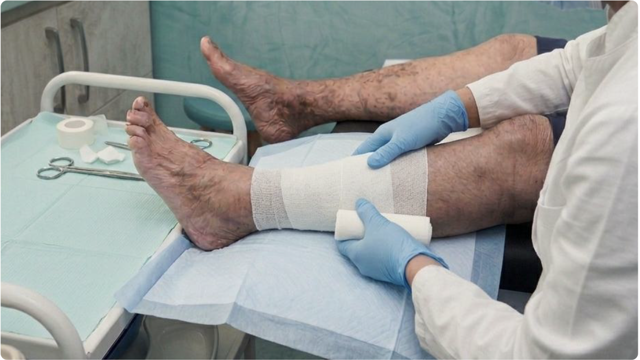
Article|1 min Why compression therapy is important
You may be wondering why you need compression therapy. Compression therapy is a key phase for venous leg ulcer treatment because it improves blood flow, reduces swelling, and helps the ulcer to heal. Wearing your compression therapy as advised by your doctor or nurse can also help reduce the risk of ulcers returning.
- Venous leg ulcers
-
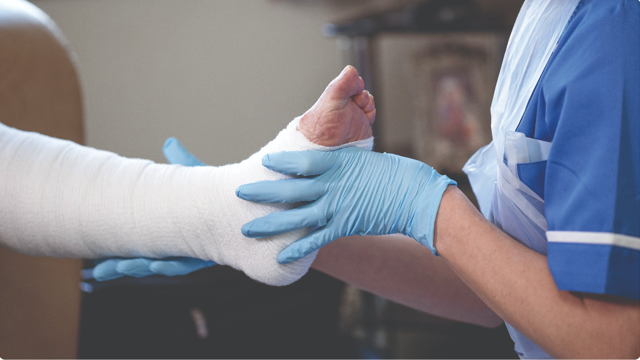
Article|1 min Signs of an infected venous leg ulcer
What is a venous leg ulcer? A venous leg ulcer is an open wound on your lower leg or ancle that hasn't healed after two weeks. It can happen if veins in the legs are weakened. Our veins carry blood back to the heart, with the help of small valves to keep it flowing in the right direction.
- Venous leg ulcers
-

Article|5 min Safetac®: the innovation that changed wound care forever
With the invention of Safetac, Mölnlycke revolutionised wound care, introducing a range of groundbreaking dressings specifically designed to minimise pain at dressing change. Discover how Safetac technology can benefit you and your patients.
- Incision care
-
Article|4 min Diabetic foot ulcers: Treatment, management, and care
Examining how diabetic foot ulcers are diagnosed, treated, and managed, taking a holistic approach to the patient’s individual wound and needs.
- Diabetic foot ulcers
-

Article|5 min Diabetic foot ulcers: Causes, risks, and epidemiology
Examining the causes, risk factors, and epidemiology of diabetic foot ulcers (DFUs), a serious complication of diabetes, and approaches to prevention and management period.
- Diabetic foot ulcers