What causes skin tears?
As we age, our skin naturally becomes thinner, drier and more fragile. This makes it easier for accidents like scraping your arm on furniture or catching your skin when removing a bandage to cause a tear.
Other factors can also increase the risk:
* Certain medical conditions
* Some medications
* Reduced mobility
* Poor nutrition or dehydration
The International Skin Tears Advisory Panel (ISTAP) defines skin tears as follows: ' A Skin tear is a traumatic wound caused by mechanical forces, including removal of adhesives. Severity may vary by depth (not extending through to the subcutaneous, fatty layer under the skin, layer)1.
A skin tear happens when the top layer of skin separates from the layers underneath. Sometimes a flap of skin is still attached, and looking after that flap properly can make a big difference to how well the wound heals.
A wound that’s easy to miss
Skin tears can happen quickly and sometimes without much pain. They may not bleed heavily but can still be serious because the skin is already fragile. It’s important to check your skin regularly, especially your arms, legs and hands.
A wound that’s easy to treat
Most skin tears can heal well with the right care. Gentle cleaning, protecting the skin flap if it’s still attached, and using the right type of dressing can help prevent infection and promote healing. If you’re ever unsure, or the wound isn’t improving, it’s best to get advice from a healthcare professional.
How to treat a skin tear: protect the flap
Most skin tears can heal well with the right care. Gentle cleaning, protecting the skin flap if it’s still attached, and using the right type of dressing can help prevent infection and promote healing.
If you’re ever unsure, or the wound isn’t improving, it’s best to get advice from a healthcare professional.
How to treat a skin tear: protect the flap?
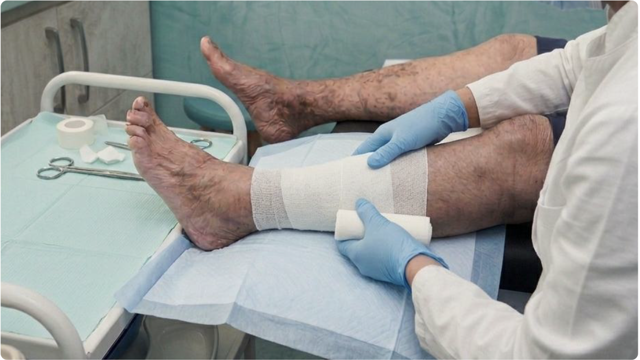
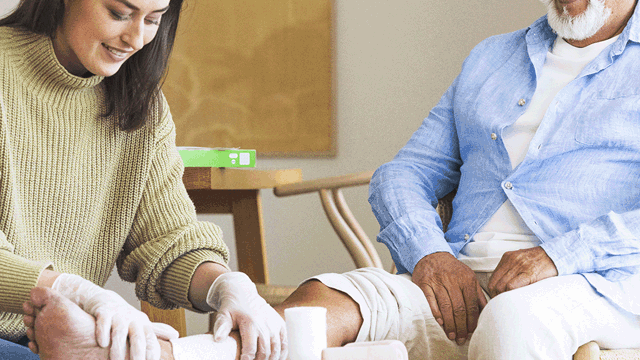
Good wound care starts with gentle cleaning using a mild solution. Avoiding harsh rubbing. If there’s still a flap of skin, keep it in place, don’t cut it off. Carefully ease it back over the wound, like closing a “door” to cover the exposed area. You can use a moist cotton tip to help do this. Place a dressing over the wound that won’t stick to the skin such as a silicone dressing that has been designed for fragile skin. This helps the body repair itself and reduces the chance of scarring.
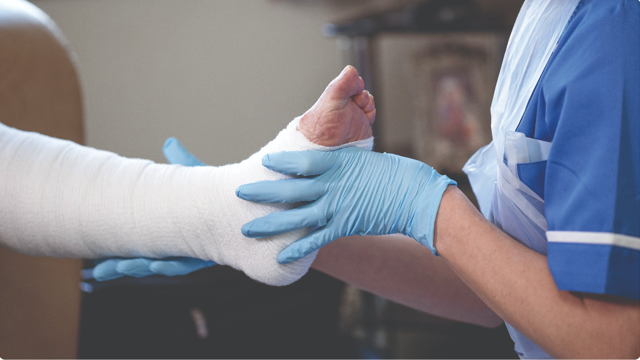
Protect the area from further knocks by covering with a tubular bandage such as Tubifast®.
Taking photos of the wound over time can also help you keep track of the healing progress and share changes with your clinician if needed. In this video, Dr Kevin Woo explains the effectiveness of soft silicone dressings for skin repair compared with local practice where soft silicone dressings are not used2.
How do you promote healing when changing dressings?
It’s important to always apply dressings gently and make sure they are removed in the correct direction. This avoids disturbing the skin flap, causing pain and distress, and disrupting healing. Mepitel® One features a simple removal symbol to optimise healing progress across dressing changes.
How do you treat skin tears with high levels of exudate?
At Mölnlycke, we have developed Mepilex® Border Flex, our next generation of flexible dressings, for skin tears with total flap loss and/or higher levels of exudate3.