Why wound cleansing matters
A healthy wound bed is essential to support the body’s wound healing process.
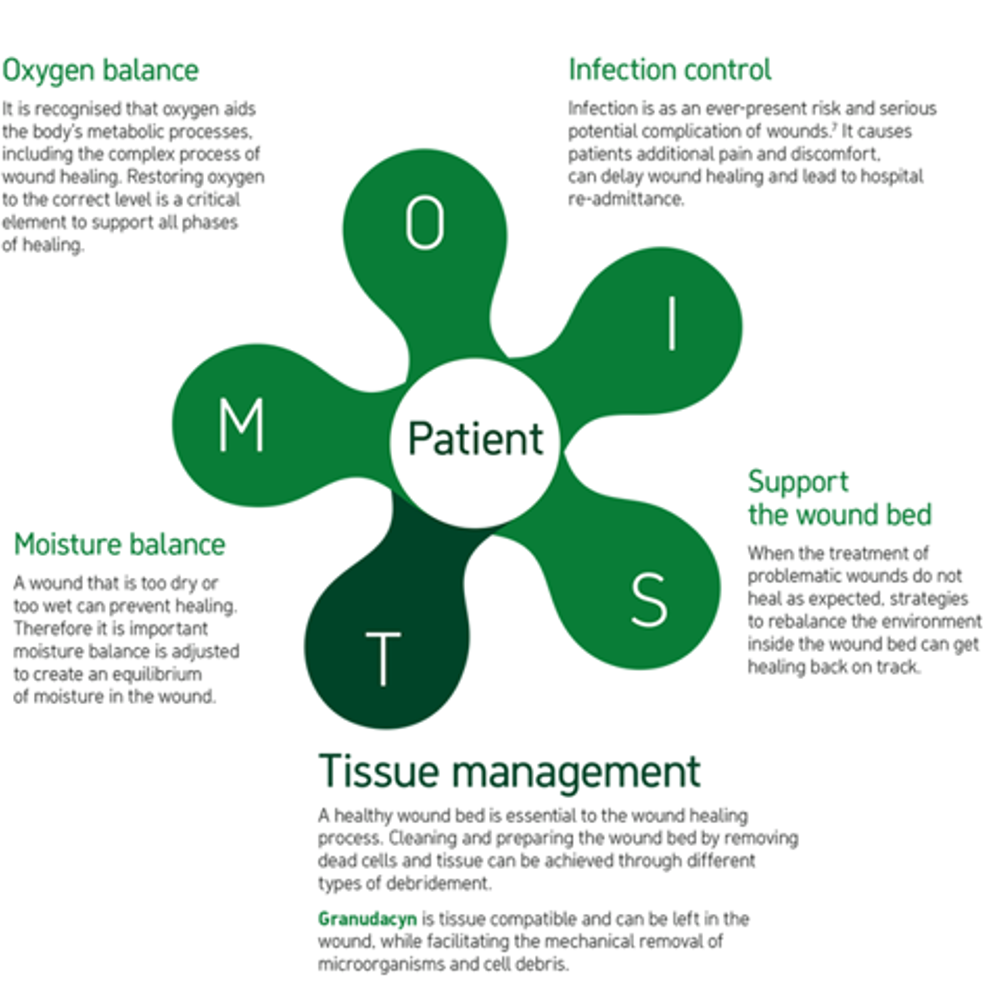
As explained in the M.O.I.S.T. concept (an educational tool for healthcare professionals developed by the umbrella organisation of German-speaking wound healing societies), wound tissue management is a vital factor in wound health. It involves cleansing and preparing the wound bed for healing by removing dead cells and tissue, which can be achieved through different types of debridement1.
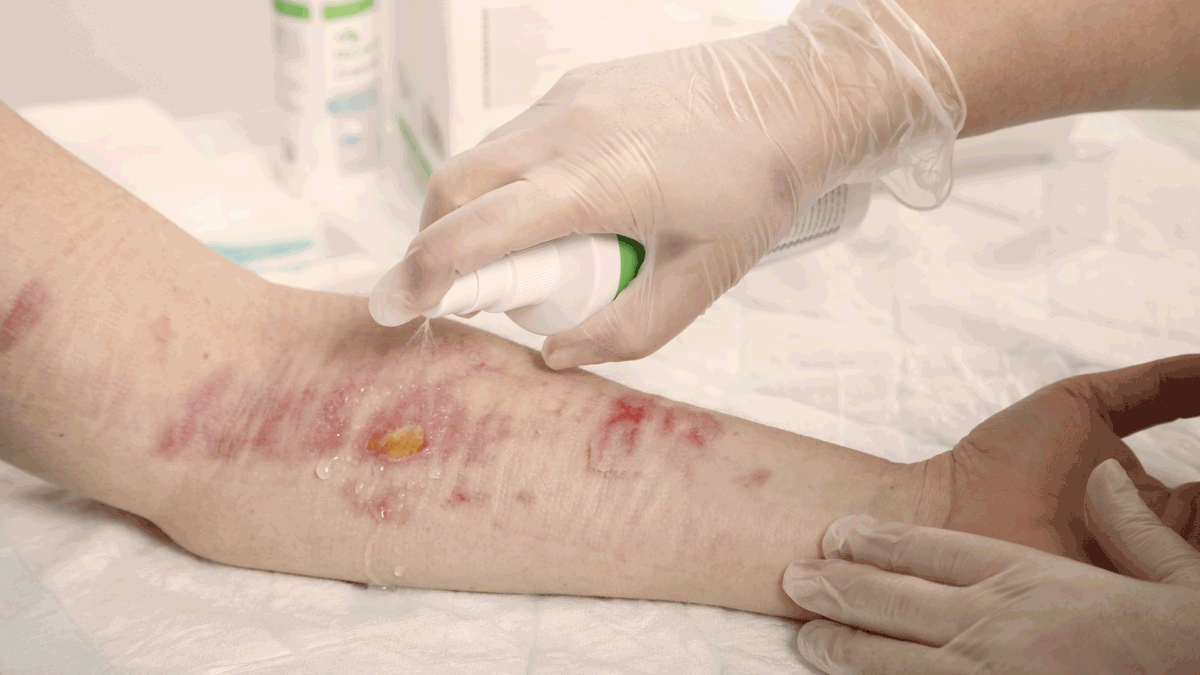
An effective wound cleansing solution (or irrigation solution) will irrigate the wound, helping facilitate the mechanical removal of microorganisms and cell debris, helping keep healing on track2.
Compared to swabbing or bathing, wound irrigation is considered the most consistently effective method of wound cleansing3.
The M.O.I.S.T concept1.
How do you irrigate a wound?
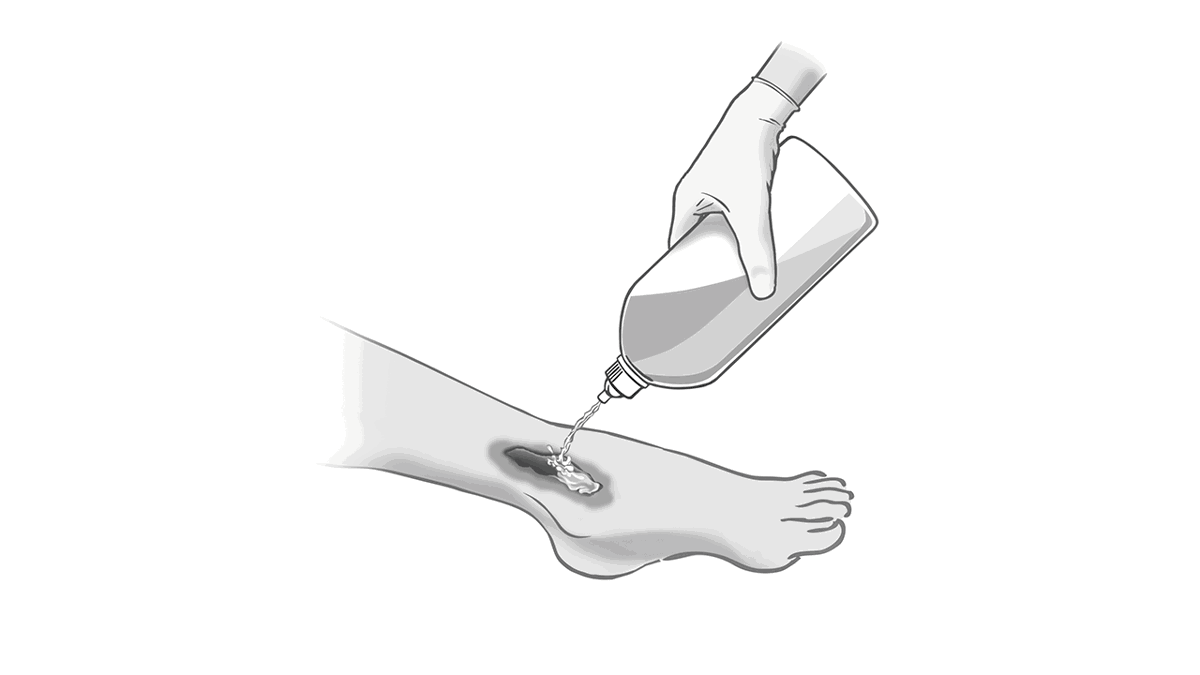
Wound irrigation is the steady flow of a solution across an open wound surface to achieve wound hydration, to remove deeper debris, and to assist with the visual examination4.
How do wound cleansers support natural healing and help reduce infection?
Wound cleansers remove barriers to healing. They do this through the mechanical effect of irrigating the wound, which can reduce the risk of infection2 by removing microorganisms and cell debris.
Cleansing and irrigating the wound in this way also reduces the malodour associated with necrotic tissue or bacterial colonisation in the wound bed5.
Are all wound cleansers compatible with tissue and effective?
In the past, healthcare professionals frequently had to choose between:
- cleansers such as soap and water or saline solutions may be ineffective against some pathogens, and
- more effective but extremely harsh solutions that may damage cells and potentially disturb the healing process
Fortunately, there is now a better solution to wound cleansing: Granudacyn®, an effective wound irrigation solution that6:
- can be used to cleanse all wounds
- is tissue compatible
- helps promote uninterrupted natural healing for improved patient wellbeing
What should you look for in a wound cleanser?
Easy and effective cleansing, including the irrigation and mechanical debridement of wounds, requires a solution that:
- is effective and suitable for most wounds
- can be applied to sensitive tissues (if appropriate) without causing harm
- is biocompatible, meaning that it has a positive benefit-to-risk ratio6
- has been properly stored and is within its use date