What is contact dermatitis?
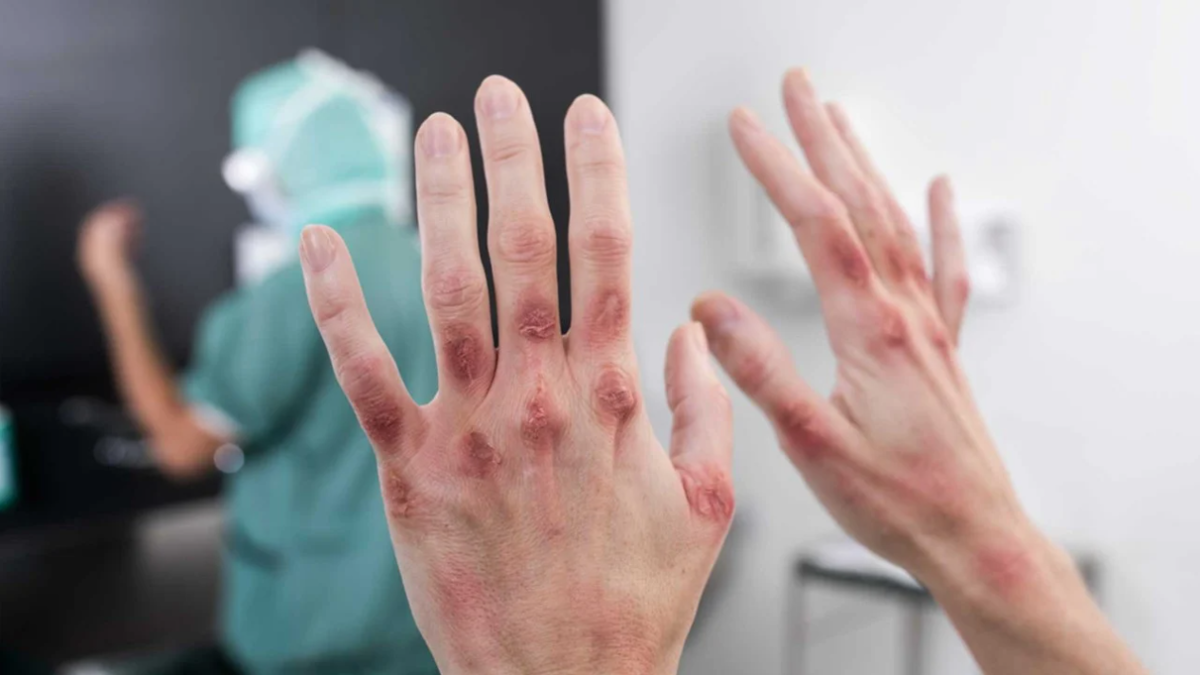
Contact dermatitis is an infammation of the skin resulting from direct contact of a substance such as solvents or other chemicals with the surface of the skin.
There are two types of contact dermatitis. Irritant contact dermatitis and allergic contact dermatitis. The symptoms can be itching, pain, rashes, bumps, burning skin and blisters1.
The most common form of contact dermatitis is Irritant Contact Dermatitis (ICD), which is caused when substances such as solvents or other chemicals irritate the skin. The exposure produces red, often more painful than itchy, patches on the involved skin areas1.
Why is contact dermatitis a problem?
A recent survey of 550 practicing operating theatre surgeons and nurses showed2:
-
31%
of surgeons and nurses have personally experienced a skin reaction on their hands in the operating theatre.
-
34%
34% of those who experienced a reaction, said the skin reaction had a negative impact on their quality of life.
-
16.2%
of those who experienced a reaction, reported they had been distracted from their work due to a skin reaction to surgical gloves.
-
20%
Nearly 20% of those who had experienced a reaction had to change gloves during an operation (due to a reaction).
What can be done to avoid contact dermatitis?
-

Use moisturising skincare products that contain emollients
-

Wear gloves that do not contain chemical accelerators that are known to cause contact dermatitis.
-
.