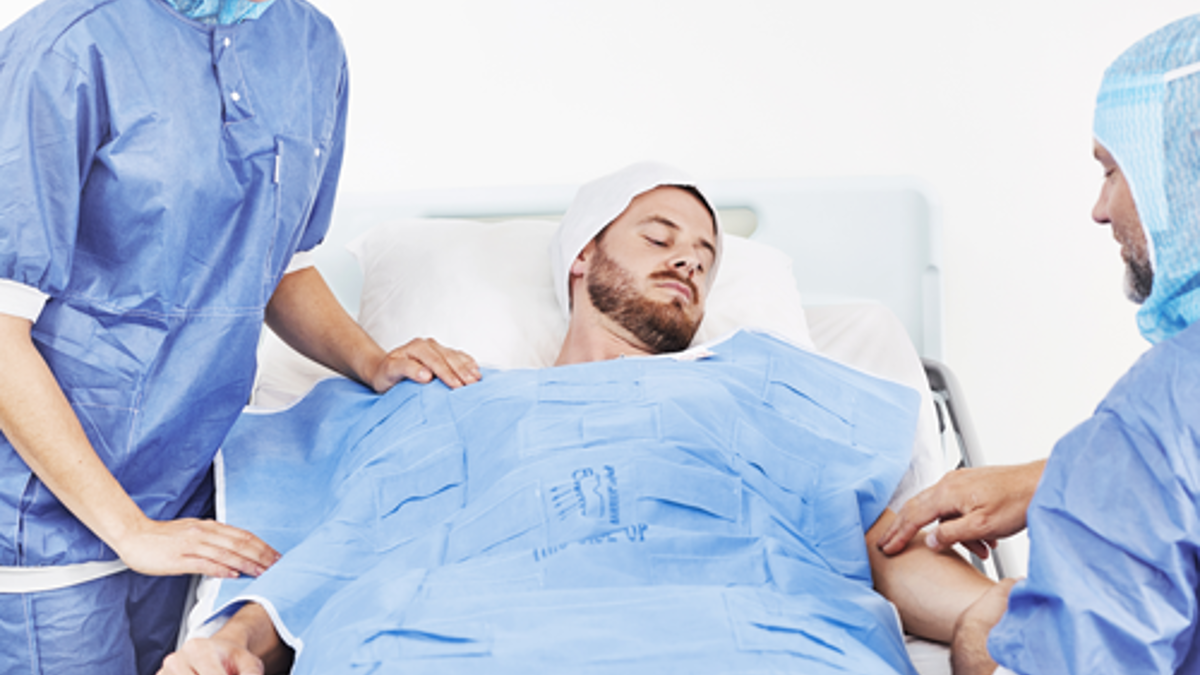
Q: Why is it important to pre-warm surgical patients?
A: The body's natural defences to cold are impacted by anaesthetic – the patient can’t shiver or vasoconstrict to keep warm. In fact, the opposite happens – there’s vasodilation, and cold blood from the peripheries mixes with the warm blood in the core. This causes a dramatic temperature drop at the moment we give the anaesthetic.
So our goal is to prevent that dramatic temperature drop. Pre-warming aims to increase the temperature of the blood in the peripheries so it’s similar to the core.
The Australian College of Perioperative Nurses (ACORN) recommends the use of active warming interventions to maintain a steady temperature before surgery, and NICE guidance suggest patients should be “comfortably warm”, i.e. between 36.5°C and 37.5°C1,2.
Q: Is pre-warming a consistently used practice, or is there still work to do to ensure it’s used as a matter of course?
A: Pre-warming is accepted as an evidence-based intervention. However, practical barriers like workflow constraints, surgical scheduling and the hectic nature of the pre-operative area can make it difficult to implement. So there’s still work to do for pre-warming to be universally implemented. But these barriers can be overcome with some practical protocols.
Q: What role do perioperative nurses play in pre-warming protocols?
A: Nurses are central in the pre-operative space and pre-warming is really nurse-driven. The ability to prevent perioperative hypothermia is in their hands.
The pre-operative holding area is very busy and often chaotic, and nurses have anxious patients, multiple tasks and a host of paperwork to deal with, so it can seem like a challenge to add another thing for the nurses to do. But by preventing perioperative hypothermia, they're preventing a lot of adverse complications that the patient may experience because of the hypothermia.