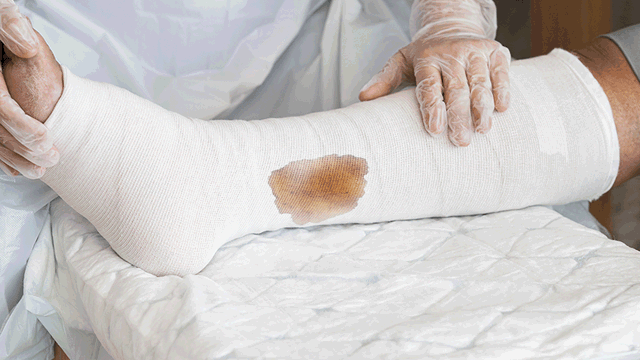
A recent study¹ developed a universal risk assessment tool for all patients undergoing major surgery – the Surgical Site Event Risk Assessment (SSERA) model. A simplified version of this model offers a practical and pragmatic way to identify high-risk patients who might otherwise be overlooked, with the aim of reducing the occurrence of surgical site complications.
What are the aims of the simplified surgical assessment tool?
The key aims are to¹:
- Identify common risk factors that can be used by a range of healthcare professionals to screen patients across all surgical procedures
- Provide an objective foundation for decision-making that may have a positive influence on reducing surgical site complications (SSCs) such as surgical site infection
How can a surgical risk assessment help reduce Surgical Site Infections (SSIs) cost-effectively?
A standardised universal surgical assessment framework, such as the simplified SSERA assessment model, is designed to be straightforward and practical to implement. It allows clinicians to balance clinical benefits with economic impact when considering risk reduction initiatives, such as the use of NPWT for incision care, for example.
Using a simplified risk assessment framework to identify those high-risk patients with the greatest potential to benefit from such an intervention is likely to be clinically appropriate and cost-effective in the long term¹.
What is the impact of SSIs?
| ‘Surgical wound infections’ or ‘surgical site infections’? Throughout this article, we use the term ‘surgical site’ rather than ‘surgical wound’ complications or infections. This is because our discussion also covers complications and infections that may occur outside the wound itself, in the skin of the peri-wound area, for example. |
A recent study has estimated that, worldwide, 11 out of 100 general surgical patients are likely to develop an infection within 30 days of surgery². The severity, duration and outcome of infections are highly variable, but the impact on those patients affected and on the global health economy is huge. The burden of surgical site infections in Australia resulting in a total direct cost of A$323.5 million in 20233.
What are the key risk factors for surgical patients?
The risk factors most frequently identified, evidenced and cited were¹:
- obesity
- diabetes
- American Society of Anesthesiologists (ASA) score
- female gender
- tobacco use
- age
- chronic obstructive pulmonary disease (COPD)
- procedure duration
- wound classification
- surgical urgency
The simplified SSERA framework includes six of these factors (shown above in bold), chosen to provide the most relevant guidance in post-operative incision care.
Intrinsic risk factors for surgical patients4
- Obesity (BMI ≥ 30):
- BMI ≥30–34.9 (Class I)
- BMI ≥35–39.9 (Class II)
- BMI ≥40 (Class III)
- Diabetes: The International Diabetes Federation estimated that 10.5% of the global adult population had diabetes in 2021, and the condition is projected to affect 643 million people by 20305. The relationship between diabetes and increased risk for SSI is widely recognised6.
- ASA (American Society of Anesthesiologists) Physical Status Classification System (score ≥ III): This system is designed to assess and communicate a patient’s pre-anaesthesia medical comorbidities7. It does not predict the risk as a standalone model, but it includes many independent risk factor predictors. There are six classes:
- I (a normal healthy patient)
- II (patient with mild systemic disease)
- III (patient with severe systemic disease)
- IV (patient with severe systemic disease that is a constant threat to life)
- V (moribund patient who is not expected to survive without the operation)
- VI (declared brain-dead patient whose organs are being removed for donor purposes)
None of these factors alone confers ‘high risk’ status, but in combination with other factors, they increase or compound the risk.
Extrinsic risk factors for surgical patients
- Wound classification (II–IV): The Association of Perioperative Registered Nurses (AORN) incision classification system8 considers surgical site infection risk:
- I (clean) – infection risk ≤2%
- II (clean-contaminated) – infection risk 4%–10%
- III (contaminated) – infection risk >10%
- IV (dirty or infected) – infection risk >25%. Classes III and IV automatically confer ‘high risk’ status; class II may do so in combination with other risk factors.
- Procedure classification (urgent/emergency): Emergency surgery always confers ‘high risk’ status; urgent surgery may do so in combination with other risk factors.
- Procedure duration (>120 mins or >75th percentile): Long duration is too simple a metric to assess the risk. The model includes as risk factors all procedures over 120 minutes in duration and shorter procedures that exceed the 75th percentile for the given procedure.
The advantages of the simplified SSERA risk assessment model
The model helps clinicians reduce the incidence of preventable surgical site complications by:
- Assisting pragmatic decision-making around the use of interventions such as closed negative pressure wound therapy
- Allowing a range of healthcare professionals to contribute to the assessment and gain an understanding of the patient’s risks and mitigation strategies
- Helping healthcare professionals raise awareness among patients of general risk mitigation activities, such as smoking cessation
Post-operative risk assessment and product choice
Product indications for post-operative incision site care
A ‘low’ or ‘moderate’ assessed risk indicates an advanced wound dressings such as Mepilex® Border Post-Op.
A ‘high risk’ indicates the use of a closed incision negative pressure system (ciNPWT) system, such as Avance® Solo.
Where the assessed risk is ‘elevated’, Avance Solo may also be suitable to reduce the likelihood of surgical site complications (SSCs). This will depend on the perceived cost/benefit ratio in each case.
Avance Solo is a system for closed surgical incisions. It is designed to:
• reduce surgical site complications
• promote healing
• facilitate patient mobility
It is indicated for use after orthopaedic, cardiothoracic, OBGYN and general/colorectal surgeries.