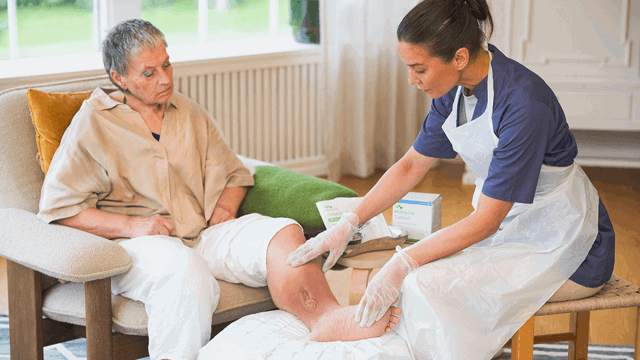
VLUs are common wounds that can deeply affect patient quality of life. Although challenging to healthcare systems due to their chronic nature, hard-to-heal wounds like VLUs pose challenging side effects. Among these are exudate management and potential leakage, as well as the need for more frequent – and potentially traumatic - dressing changes and associated pain. All of these cause a range of stressful emotions for patients, including distress, embarrassment, and anxiety. The management of VLUs is about more than just the physical wound for patients: it is also psychosocial. How can various intervention including a wound dressing selection, play a role in minimising distress and pain and improve patient wellbeing?
It is important to note, though, that VLU management is changing and the outlook is improving. There are considerations and interventions to help raise the bar on VLU care and minimise the burden of VLUs to both healthcare systems and to patients.
Focusing on more effective wound management for better patient quality of life
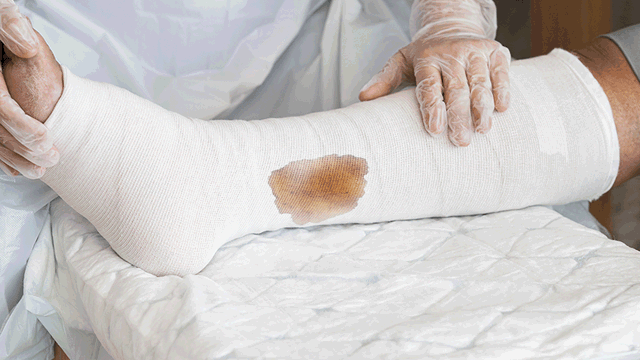
VLUs are often hard to heal wounds with high levels of exudate (which can lead to embarrassing leakage, skin maceration and odours as well as immobility and social isolation), pain and more. The high rate of recurrence (50-70%)1 can lead to longer-term psychosocial effects, such as depression, anxiety, self-esteem issues and a decreased health-related quality of life2,3,4.
Daily life for people living with highly exuding wounds like VLUs poses many challenges that largely stem from issues with exudate. Many patients find that they worry about exudate leakage, causing soiled garments, unpleasant odours and an unappealing visual appearance. The resulting embarrassment and distress may keep them from living their lives to the full. More longer-term concerns include the increased risk of infection, discomfort, skin damage around the wound from leakage and maceration, the potential for the wound to increase in size, additional pain and longer time to heal.
This collection of side effects can be life-changing in a negative way, manifesting in all manner of ways, including self-isolation, distress and depression. Quality of life is an ongoing concern for people living with VLUs and should also be a bigger focus for healthcare providers.
Considerations for VLU management: Quality of life improvements
How can quality of life be better addressed through more effective VLU management?
A Wounds International article, co-written by Dot Weir, RN, Saratoga Hospital Center for Wound Healing and Hyperbaric Medicine and Mölnlycke® Health Care Global Senior Medical Affairs Manager, Phil Davies, addresses the considerations for care as well as how dressing selection plays an important role not only in wound healing but in giving patients back their quality of life5.
The article advocates for improved treatment and care, focusing on areas such as managing chronic venous insufficiency and venous hypertension with compression therapy as the “gold standard” of conservative treatment5.
At the same time, the holistic approach to VLU care advocates for careful exudate management to avoid not just the physical side effects of exudative wounds and leakage but also the psychological ones, such as the worry, embarrassment and loss of self-esteem that patients report experiencing.
A dressing selection is another key consideration in the VLU management journey. Appropriate dressings can perform in conjunction with compression therapy while also managing exudate to prevent embarrassing leakage and further impact to the skin, minimising dressing-related pain and trauma, and avoiding unnecessary dressing changes, all of which contribute to a better and improved quality of life, an improved quality of life and restoration of patient confidence.
The article is featured in Wounds International and can be read in full here - Read the full article to find out more about VLU management and patient quality of life.