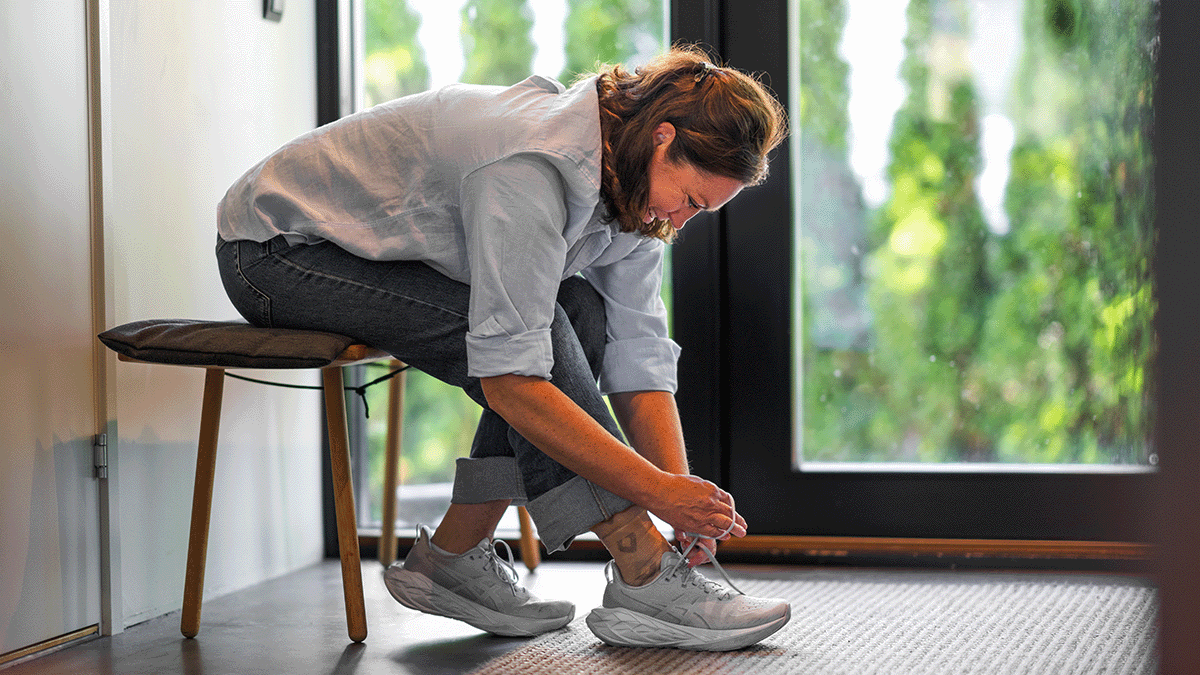
Your doctor or nurse will provide treatment for your venous leg ulcer, at a clinic or during home visits. However, your role is just as crucial. The choices you make every day can speed up healing and improve your overall well-being. Please discuss any treatment options with a qualified health care professional before undertaking. It is advised to seek a management plan from a qualified healthcare professional as an initial step.
We provide clear, simple steps to take control of your recovery. Understanding what to do - and why - will help you get the best results from your treatment plan. Healing starts with you.
5 steps to better healing
-

Wear a compression bandage or hosiery garments as directed by a qualified healthcare professional
Compression improves blood flow, reduces swelling, and helps wounds heal faster. -
Exercise daily
Regular movements, like walking or leg exercises, boosts circulation and reduces pressure in your veins, helping the healing. -
Eat well and drink plenty of water
A healthy diet with enough protein, vitamins, and fluids supports skin repair and strengthens your immune system.
-

Get enough sleep
Sleep helps your body heal and fight infections. Aim for 7-8 hours per night for better recovery. -

Learn how to recognise signs of infection
Watch for redness, swelling, increased pain, or unusual drainage. Early treatment prevents complications. -
Your doctor or nurse is there to help — don’t hesitate to reach out!
When to call your nurse or doctor:
Start with a discussion with your nurse or doctor to develop a management plan. Contact your treating healthcare professional if you notice any of the following:
- Changes in wound odour
- Increased pain: Significant or unmanageable pain
- Wound changes: Increased pain levels and swelling
- Fluid leakage: Soaked dressing with fluid