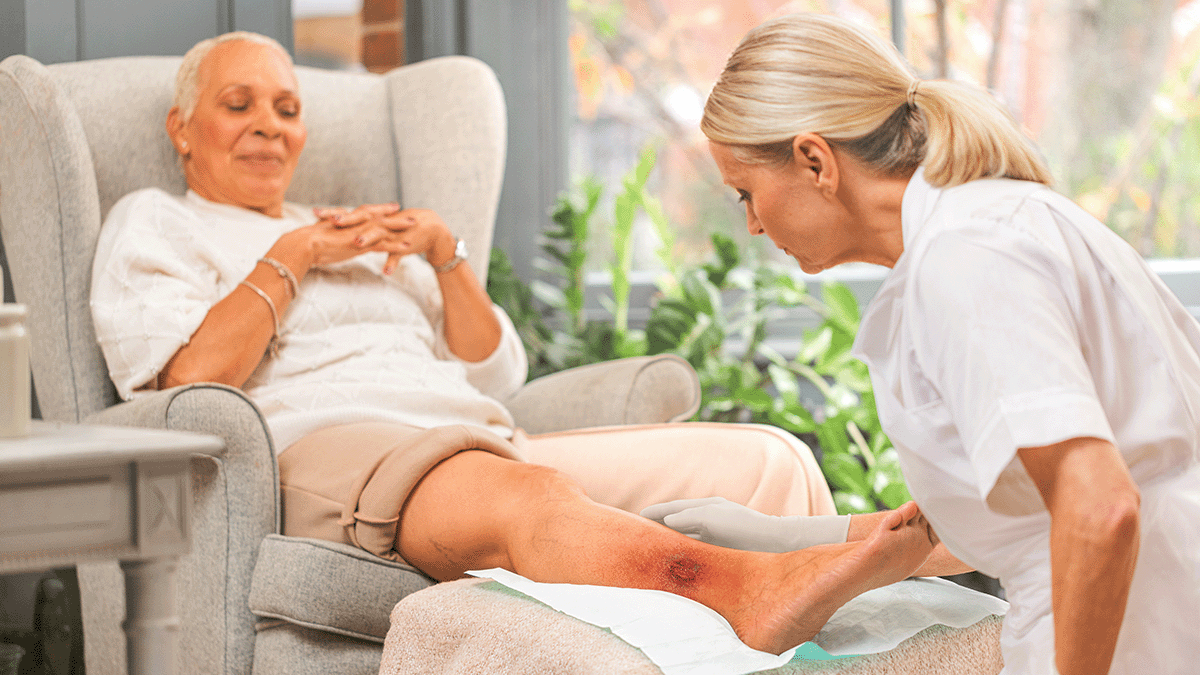
Venous leg ulcers are open wounds on the lower leg or ankle that don’t heal within two weeks.
They develop when veins in the leg are weakened, causing them to struggle carrying blood back to the heart. If vein valves are damaged—whether from age, injury, or surgery—blood can move backwards and collect in the veins, increasing pressure in the leg. Over time, this leads to swelling, skin changes, and eventually, a painful wound.
Healing takes time, and without proper care, venous leg ulcers can reoccur. Consistent care and small daily actions can make a big difference. You are not alone—every step you take brings you closer to healing.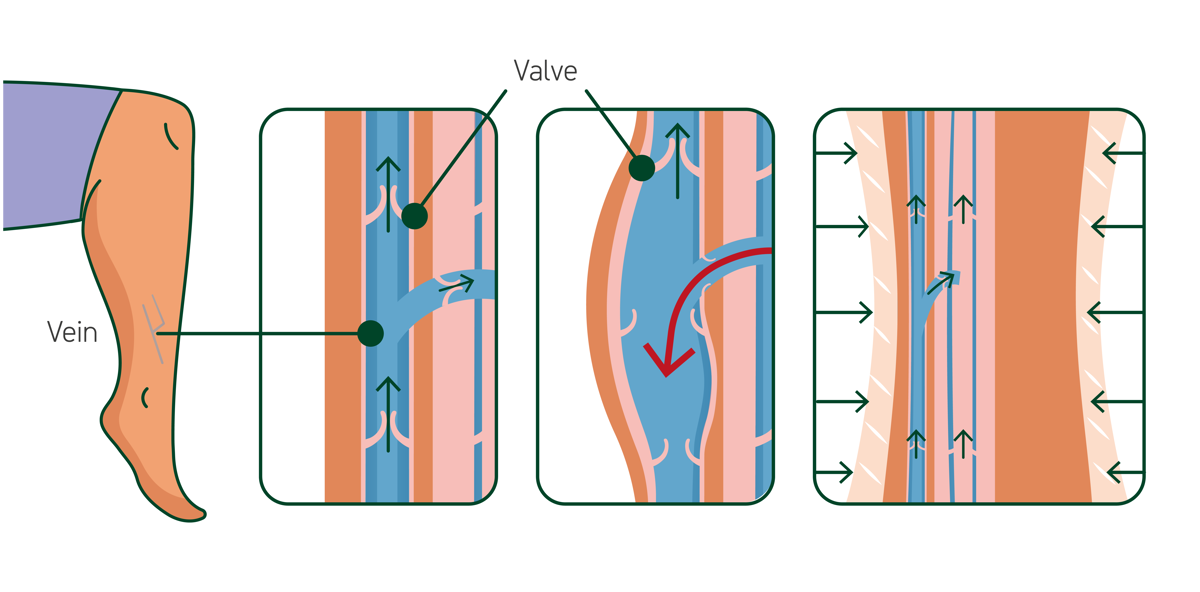
-
A healthy vein
Effectively moves blood back to the heart as muscles contract with movement. A functioning valve in the vein stops blood moving downwards. -
A damaged venous system
Swelling caused by weakened valves in your veins means blood pools in the veins leading to increased pressure and fluid moving to the tissues causing swelling. -
The action of compression
Pressure from your compression bandage assists your veins to allow blood to flow back to your heart. It removes the swelling in the tissues by moving it into the veins and lymphatic system and stops further swelling.
Risk factors:
Certain factors can increase the risk of a venous leg ulcer. These include age, pregnancy, having varicose veins, limited mobility, a history of blood clots, leg injuries, overweight, or having a family history of vein issues.