Diabetic foot ulcer solutions
Treating diabetic foot ulcers
Managing diabetic foot ulcers
At Mölnlycke® we offer a streamlined portfolio of easy-to-use products for effective management of DFUs.
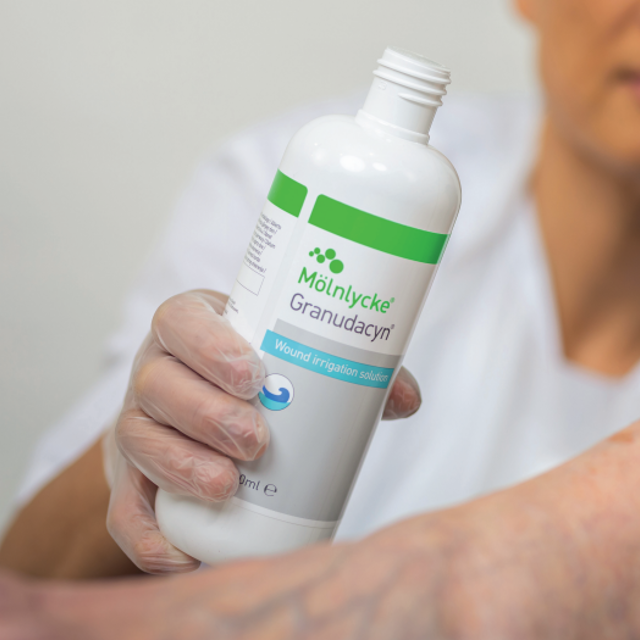
Debride
Wound cleansing is an essential component in treating DFUs. Wound cleansers, such as Granudacyn®, support wound healing through the mechanical effect of rinsing which can reduce the risk of infection.

Oxygenate
Oxygen is an important requirement in the complex process of wound healing. Addressing oxygen deficiency through topical oxygen therapy, such as Granulox®, can help improve wound healing outcomes.
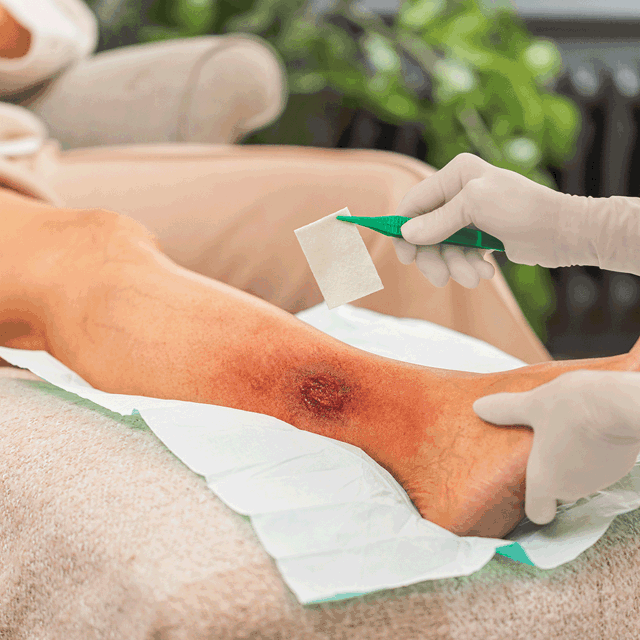
Manage infection
Infection is an ever-present risk and serious complication of chronic (hard-to-heal) wounds. It causes patients additional pain and discomfort, can delay wound healing and lead to hospital readmittance. Antimicrobial dressings, such as Exufiber® Ag+ can help reduce bioburden1.
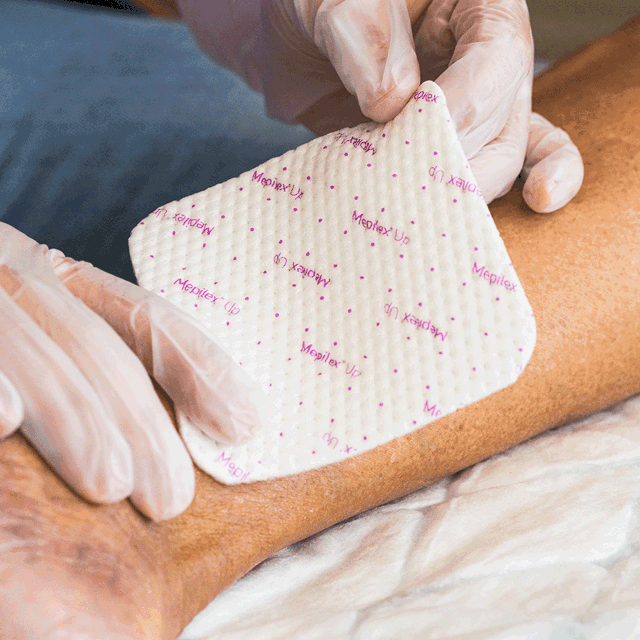
Dress
Choice of dressing matters, especially in difficult-to-dress areas. The correct dressing, such as Mepilex® Up, should manage exudate, protect the wound and ensure patient comfort to help promote optimal wound healing conditions.


Related articles
-

Wound care | 4 min read Diabetic foot ulcers: Causes, risks, and epidemiology
Examining the causes, risk factors, and epidemiology of diabetic foot ulcers (DFUs), a serious complication of diabetes. Approaches to prevention and the management of DFUs are important when managing the person with diabetes.
-

Wound care | 5 min read Diabetic foot ulcers: Treatment, management and care for healthcare professionals
Examining how diabetic foot ulcers (DFUs) are diagnosed, treated and managed, taking a holistic approach to the patient’s individual wound and needs.
-
Wound care | 4 min read Topical oxygen therapy with Granulox®
Watch video