Wound care solutions
Venous leg ulcer management
A holistic approach to complex care
Treating venous leg ulcers (VLUs) requires collaboration and a patient-centric approach. Our solutions encompass the products needed as well as education and empowerment. By combining our comprehensive VLU approach with your expertise, an effective treatment can be delivered, leading to better outcomes and improved quality of life for patients.
Wound Stories: A patient and clinician's perspective on living with venous leg ulcers
Watch the video to learn more about the perspectives on venous leg ulcers from a nurse.
Contact our sales team
To create a positive impact, we build mutually beneficial relationships with employees, customers and the people in our communities.
Start your conversation hereWound Stories: Living with venous leg ulcers
Poor management of highly exuding venous leg ulcers significantly impacts a person's quality of life. Inadequate care can delay wound healing and result in leakage, soiled clothing and bedding, unpleasant odours, pain, and frequent dressing changes. These challenges often lead to embarrassment, emotional distress, and social isolation for patients.


Related articles
Read all-

Wound care | 5 min read Safetac® Technology: the innovation that changed wound care forever
With the invention of Safetac® Technology, Mölnlycke® revolutionised wound care, introducing a range of groundbreaking dressings specifically designed to minimise pain at dressing change. Discover how Safetac Technology can benefit you and your patients.
-
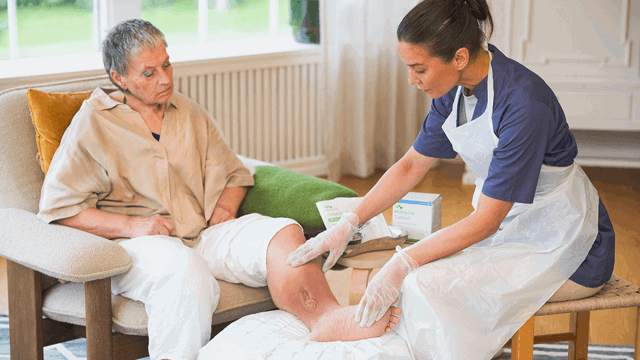
Wound care | 4 min read How to look after your wound
What do you need to know to look after your wound at home? This page guides you through the process of changing your wound dressings safely.
-

Wound care | 3 min read Expert interview: How can clinicians engage procurement and finance stakeholders in implementing a pressure injury prevention programme?
As part of a recent investigation into pressure injury prevention, Mölnlycke® asked this and related questions to Benedict Stanberry, an expert in health economics.
-
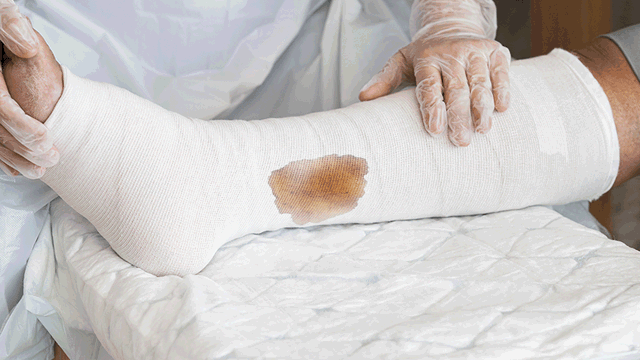
Wound care | 6 min read Venous leg ulcers: Clinical understanding and epidemiology
Venous leg ulceration and chronic venous insufficiency represent a significant health problem throughout the world. Compression therapy is key to successful management¹.
-

Wound care | 5 min read The impact of venous leg ulcers and “leaky legs”
The chronic nature of venous leg ulcers (VLU) means that the cycle of skin healing followed by breakdown and potential for infection can repeat – sometimes over decades. This creates quality of life issues for patients1, in particular because of physical symptoms, which can be both painful and embarrassing.
-

Wound care | 2 min read Wound exudate: how to assess and manage exuding wounds for the best patient outcomes
Exudate – or wound fluid – plays a vital part in the natural wound healing process, but how do you manage exudate to get the best patient outcomes?
-

Wound care | 4 min read Diabetic foot ulcers: Causes, risks, and epidemiology
Examining the causes, risk factors, and epidemiology of diabetic foot ulcers (DFUs), a serious complication of diabetes. Approaches to prevention and the management of DFUs are important when managing the person with diabetes.
-
Wound care | 5 min read Diabetic foot ulcers: Treatment, management and care for healthcare professionals
Examining how diabetic foot ulcers (DFUs) are diagnosed, treated and managed, taking a holistic approach to the patient’s individual wound and needs.
-

Wound care | 3 min read Burn scar treatment
We know that burn scars can affect your quality of life. They can cause discomfort and itching, and they may also make you feel self-conscious. It’s not always easy to return to your daily life and activities, but there is a lot you can do to prevent and reduce hypertrophic scars.