Jamie Smith
Media Relations
Email: jamie.smith@molnlycke.com
Phone: +46 723 757507
Gothenburg, Sweden. 31 March 2026. Mölnlycke®, a global leader in MedTech, today welcomes the publication of Shaping the future of wound care in Europe, the first joint industry white paper from the MedTech Europe Wound Care Sector Working Group. The wound paper highlights the growing burden of chronic wounds and urges EU policymakers to elevate wound care as a strategic health priority across the EU.

Across Europe, up to 14.9 million people suffer from chronic wounds, placing a significant and often overlooked burden on patients, caregivers and health systems1,2,3. Chronic wound care consumes up to 4% of European healthcare budgets, driven by delayed diagnosis, prolonged treatment, preventable complications and workforce strain2.
Despite this scale, chronic wounds remain under-recognised in policy and are often treated as secondary concerns, even though conditions such as diabetic foot ulcers carry a five-year mortality rate comparable to certain cancers4. The white paper underscores that no wound begins as chronic, but becomes chronic when prevention, early intervention and coordinated care fall short.
To address these challenges, the white paper identifies three priority areas for reform:
Building on these priorities, the white paper outlines four recommendations for coordinated action among policymakers, clinicians, payers, patient organisations, and industry:
Mölnlycke strongly supports these recommendations, emphasising the need to overcome fragmentation of care, strengthen clinician education and invest in prevention to reduce chronicity.
“Chronic wounds are preventable, yet patients continue to suffer because care is fragmented and intervention comes too late. By prioritising prevention, strengthening clinician training and building integrated pathways, Europe can dramatically improve outcomes and reduce avoidable burden on patients and healthcare systems,” says Isabella Notarangelo, Governmental Affairs and Policy Manager at Mölnlycke as well as Co-Vice Chair of the MedTech Europe Wound Care Sector Working Group. Isabella added “This white paper provides a clear roadmap, now it’s time for policymakers to act.”
As Europe moves toward outcome-focused care models, Mölnlycke believes value-based healthcare is the most sustainable path to prevention, earlier diagnosis, fewer complications, more efficient care and better patient outcomes.
Read the full white paper: Shaping the future of wound care in Europe https://www.medtecheurope.org/resource-library/shaping-the-future-of-wound-care-in-europe/
For more information, please contact:

Media Relations
Email: jamie.smith@molnlycke.com
Phone: +46 723 757507

Tue, Mar 24, 2026 Today, it was announced that Zlatko Rihter, CEO of Mölnlycke Health Care, has informed the Board of Directors of his decision to resign. Following his decision, Guillaume Joucla, Chief Financial Officer, has been appointed interim CEO of Mölnlycke Health Care. Mölnlycke’s Board has initiated the recruitment process for a permanent CEO.
A broad public–private partnership is now being launched to accelerate the green transition within the Swedish healthcare and life science sector. The initiative aims, through collaboration, to reduce greenhouse gas emissions with the ambition of reaching net zero across the entire value chain by 2045.
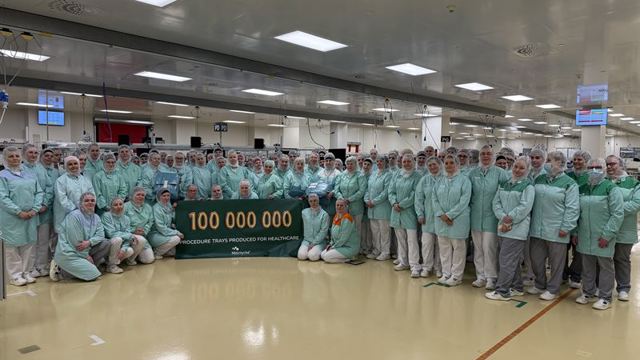
Gothenburg, Sweden. 27 January 2026. Mölnlycke Health Care, a global leader in Medtech, headquarted in Gothenburg, Sweden, is celebrating the production of 100 million ProcedurePak® trays at the company's production sites in the Czech Republic.

Healthcare systems worldwide are under pressure to deliver more with less. Fewer resources, tighter budgets, and growing demands. In this article, published in Clinical Services Journal, Eric De Kesel, Chief Operating Officer & Executive Vice President Sustainability and Dr Emma Wright, Chief Medical Officer at Mölnlycke Health Care, explain how Mölnlycke is turning sustainable healthcare from aspiration into practice by connecting performance, people, and planet.

Clinician wellbeing is the cornerstone of sustainable healthcare. Dr Emma Wright, Chief Medical Officer at Mölnlycke Health Care, explains why supporting those who deliver care is essential and how value-based healthcare can unlock better outcomes for patients, healthcare professionals, and healthcare systems.

We are delighted to announce that Mölnlycke was recognised with ‘ESG Transparency Award' by EUPD Research. Mölnlycke achieved the highest excellence level with the total score of 95,5%.

We are proud to play our part in shaping the future of wound care in Europe. Mölnlycke has been elected one of the organisations leading the Wound Care Sector Working Group at MedTech Europe, the industry association representing medical technology across the continent.

Smarter incision care and partnerships are key to enhanced clinical practise and improved patient outcomes.

Gothenburg, Sweden. 12 November 2025. Mölnlycke Health Care, a global leader in MedTech, is the first company to donate a patent to SKF’s groundbreaking digital platform, The Patent Bay – taking bold action to harness collaboration and accelerate innovation in sustainable healthcare.